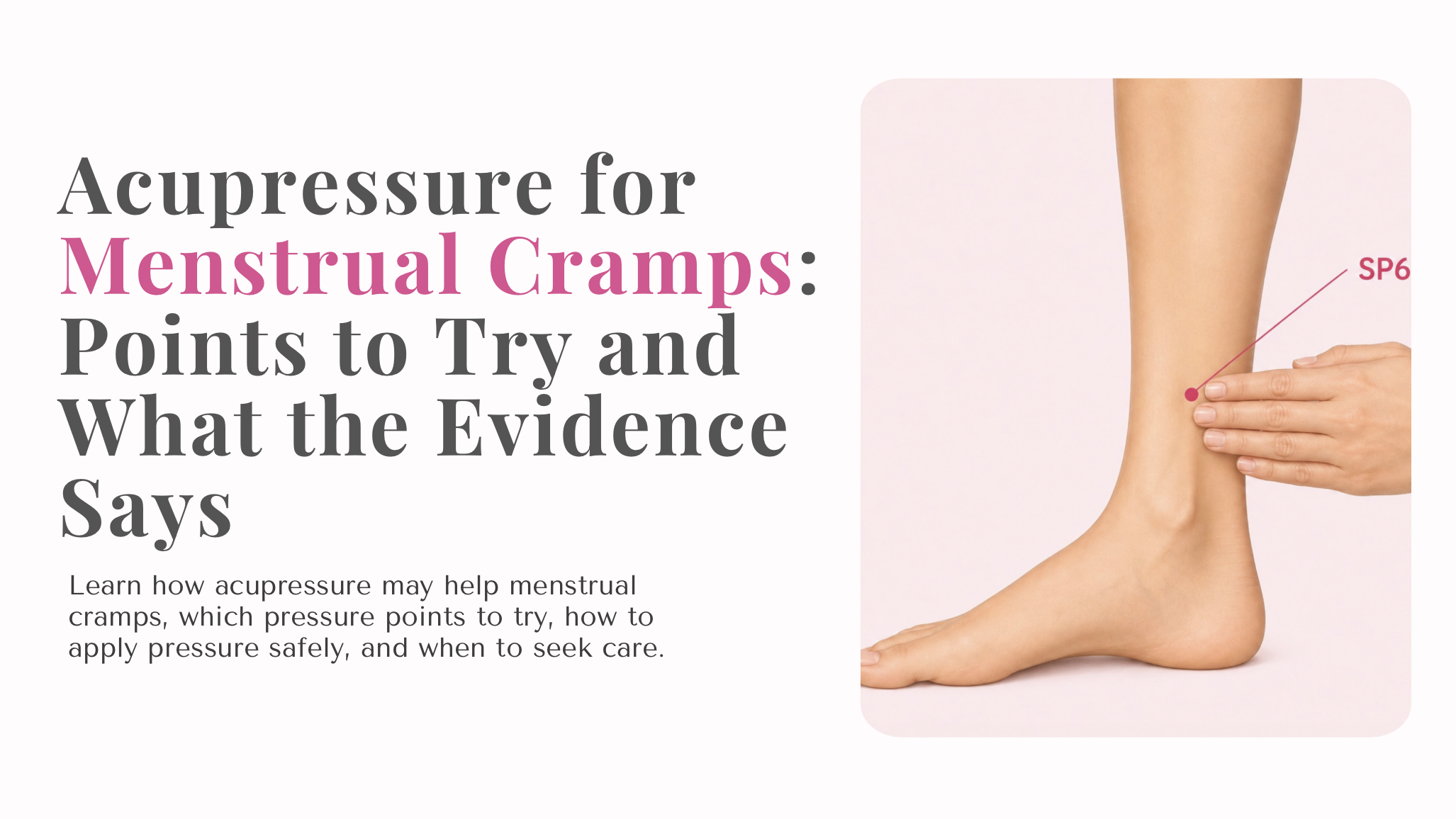
When menstrual cramps begin, you may want warmth across your lower belly, a quiet place to rest, or a simple way to soften the tension. Acupressure appeals to many women because it is gentle and something you can try at home with only your hands.
Acupressure will not make every cramp disappear or explain away severe pain. Still, research suggests that stimulating certain points may reduce menstrual pain for some women and can complement a broader period care routine.
Why Menstrual Cramps Happen
Most common menstrual cramps are caused by prostaglandins, substances that help the uterus contract so it can shed its lining. Higher levels may create stronger contractions and aching, throbbing, or waves of pain across the lower abdomen and back.
This is primary dysmenorrhea. Secondary dysmenorrhea is connected to another condition, such as endometriosis, adenomyosis, or fibroids. A pressure point may provide comfort, but it cannot treat an underlying condition.
What Is Acupressure?
Acupressure comes from traditional Chinese medicine and uses finger or thumb pressure rather than needles. Pressure is applied to places called acupoints. Many are also used in acupuncture, although the techniques are not interchangeable.
How acupressure may influence pain is still being studied. It may affect pain processing, encourage relaxation, and ease tension that accompanies cramping. Think of it as support rather than a cure.
What Does the Research Say?
A 2025 systematic review of 22 randomized trials found that acupoint stimulation may reduce pain in primary dysmenorrhea. However, that review included several techniques, including acupuncture and other forms of stimulation, not acupressure alone. The researchers rated the certainty of the evidence as low to moderate because the studies varied considerably and some had a meaningful risk of bias. You can read the review in the Journal of Pain Research.
Earlier research on SP6 found that acupressure may provide some relief compared with rest, light touch, or pressure elsewhere. Better trials are still needed. The evidence is promising enough to try acupressure if it feels good, but not strong enough to promise it will work for everyone.
Two Acupressure Points Commonly Used for Menstrual Cramps
SP6 on the Inner Leg
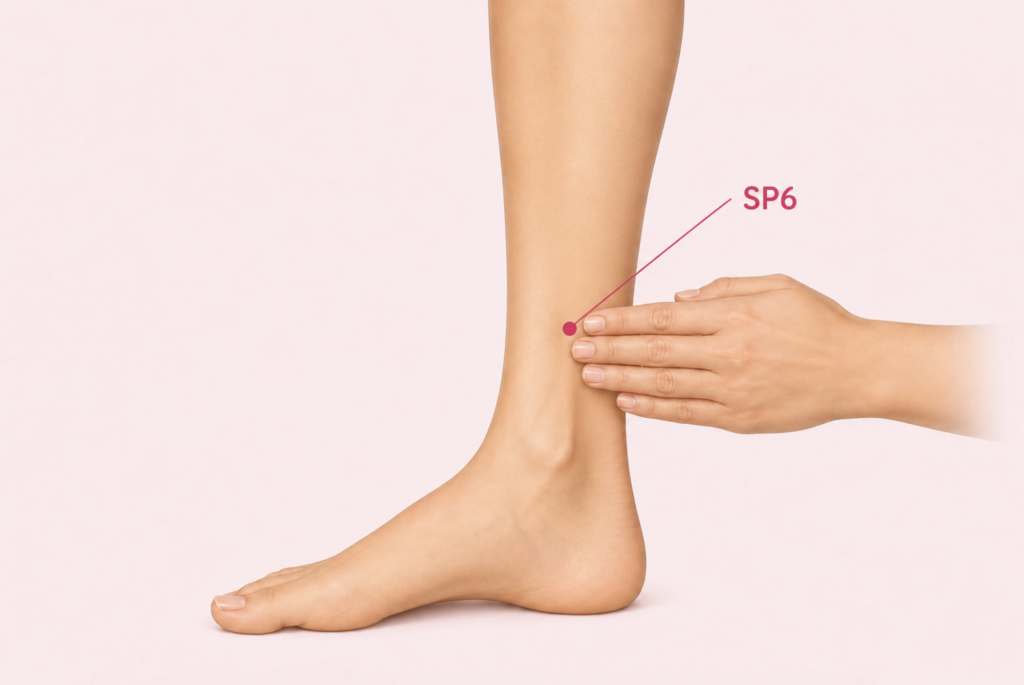
SP6, also called Sanyinjiao, is frequently studied for menstrual discomfort. Place four fingers above the highest point of your inner ankle bone. The point is near the upper edge of those fingers, just behind the shinbone.
Use your thumb to apply firm but comfortable pressure. Hold the pressure or make small, slow circles for one to two minutes, then repeat on the other leg. You may feel tenderness, but the sensation should not be sharp, burning, or painful.
LI4 on the Hand
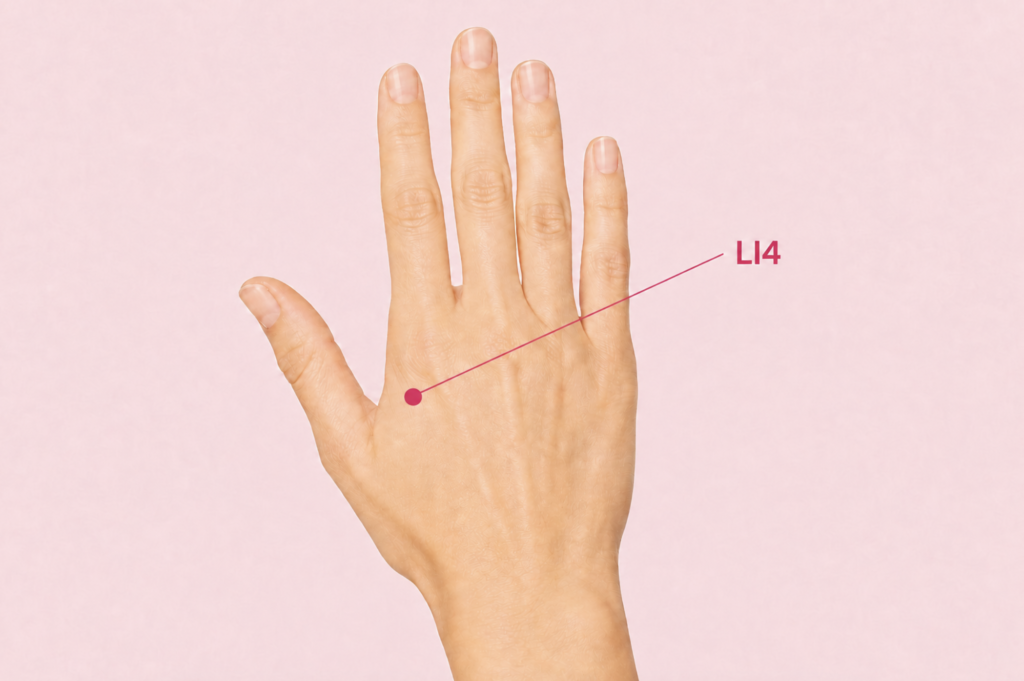
LI4, also known as Hegu, is in the fleshy area between the thumb and index finger. Bring them together and notice the mound that forms on the back of your hand. Relax, then press the highest part of that mound with your opposite hand.
Apply steady pressure for one to two minutes while breathing slowly, then switch hands. Research has studied LI4 alone and together with SP6 for menstrual pain, although the results remain preliminary.
Traditional guidance advises avoiding SP6 and LI4 during pregnancy. If you are pregnant, could be pregnant, or have unexplained pelvic pain, ask a qualified professional before using them.
How Much Pressure Should You Use?
More pressure does not necessarily mean more relief. Aim for a firm sensation that still allows your body to relax. If you hold your breath, tighten your shoulders, or pull away, ease up.
There is no proven schedule for everyone. Try each point for one to two minutes when cramps begin or the day before an expected period. Stop with numbness, dizziness, bruising, irritation, or increased pain. Never press broken, infected, swollen, or injured skin.
Acupressure Works Best as Part of a Larger Routine
Often the realistic approach is combining a few gentle things that make the day more manageable. Acupressure may feel better alongside heat, rest, or light movement. Our guide to exercise for menstrual cramps explains how walking and gentle stretching may help when your body feels willing to move.
Nonsteroidal anti inflammatory medicines such as ibuprofen and naproxen reduce prostaglandin activity, but are not appropriate for everyone. The MedlinePlus guide to period pain provides an overview. Ask a pharmacist or healthcare professional what is safe with your health history and medications.
When Menstrual Pain Needs More Than Home Care
You know when a period feels uncomfortable, and you also know when something feels unusually wrong. Talk with a healthcare professional if cramps regularly interrupt work, school, sleep, exercise, or daily life. It is also worth seeking care if the pain suddenly becomes worse, begins for the first time after age 25, happens outside your period, or comes with fever, pain during sex, very heavy bleeding, fainting, or difficulty becoming pregnant.
Pain that does not improve with appropriate self care deserves attention. Conditions such as endometriosis can be missed when severe symptoms are dismissed as simply having a bad period.
Where Period Vitamin Fits Into Your Routine
Menstrual cramps do not automatically mean you lack vitamins or minerals, and no supplement should be expected to stop contractions immediately. Nutrition can still support your cycle as a whole. Period Vitamin makes selected vitamins, minerals, and herbal ingredients easier to include in a consistent routine.
Think of it as one part of the larger picture, alongside nourishing food, movement, sleep, stress support, and medical care when symptoms need evaluation. It is not a replacement for diagnosis or treatment of severe menstrual pain.
Frequently Asked Questions
Which pressure point is best for menstrual cramps?
SP6 is one of the most commonly studied acupressure points for primary menstrual cramps. LI4 has also been studied, both by itself and together with SP6. No point has been proven to be the best for every woman, so comfort and individual response matter.
How quickly does acupressure work?
Some women notice a change shortly after applying pressure, while others notice little difference. Some studies used repeated sessions over several cycles, so lack of immediate relief does not mean you are applying pressure incorrectly.
Can acupressure make menstrual cramps worse?
Gentle acupressure should not create sharp pain or make cramps more intense. Stop if symptoms worsen or if you experience numbness, bruising, dizziness, or skin irritation. Persistent or severe pelvic pain should be assessed rather than repeatedly covered up with home remedies.
Can I use acupressure with a heating pad or pain medicine?
Acupressure can generally be used alongside heat and other comfort measures. If you take pain medicine, follow the label and ask a healthcare professional if you have medical conditions, take other medications, or are unsure whether a product is appropriate for you.
A Gentle Tool, Not a Promise
Acupressure offers a quiet, practical response when cramps begin. Even modest relief can matter. Use comfortable pressure, notice how your body responds, and never assume severe or changing pain is something you must endure.