There Are So Many PMS Solutions. How Do You Know Which One Is Right? PMS Solutions: How to Choose the Right One for Your Symptoms
If you’ve searched online for ways to relieve PMS, you’ve probably noticed one thing right away: there are countless options.
From vitamins and herbal supplements to teas, magnesium, heating pads, exercise programs, and special diets, it can feel overwhelming to figure out what is actually worth trying.
Having choices is a good thing, but too many choices can also make it difficult to know where to begin.
Start With Your Symptoms
PMS is not the same for everyone.
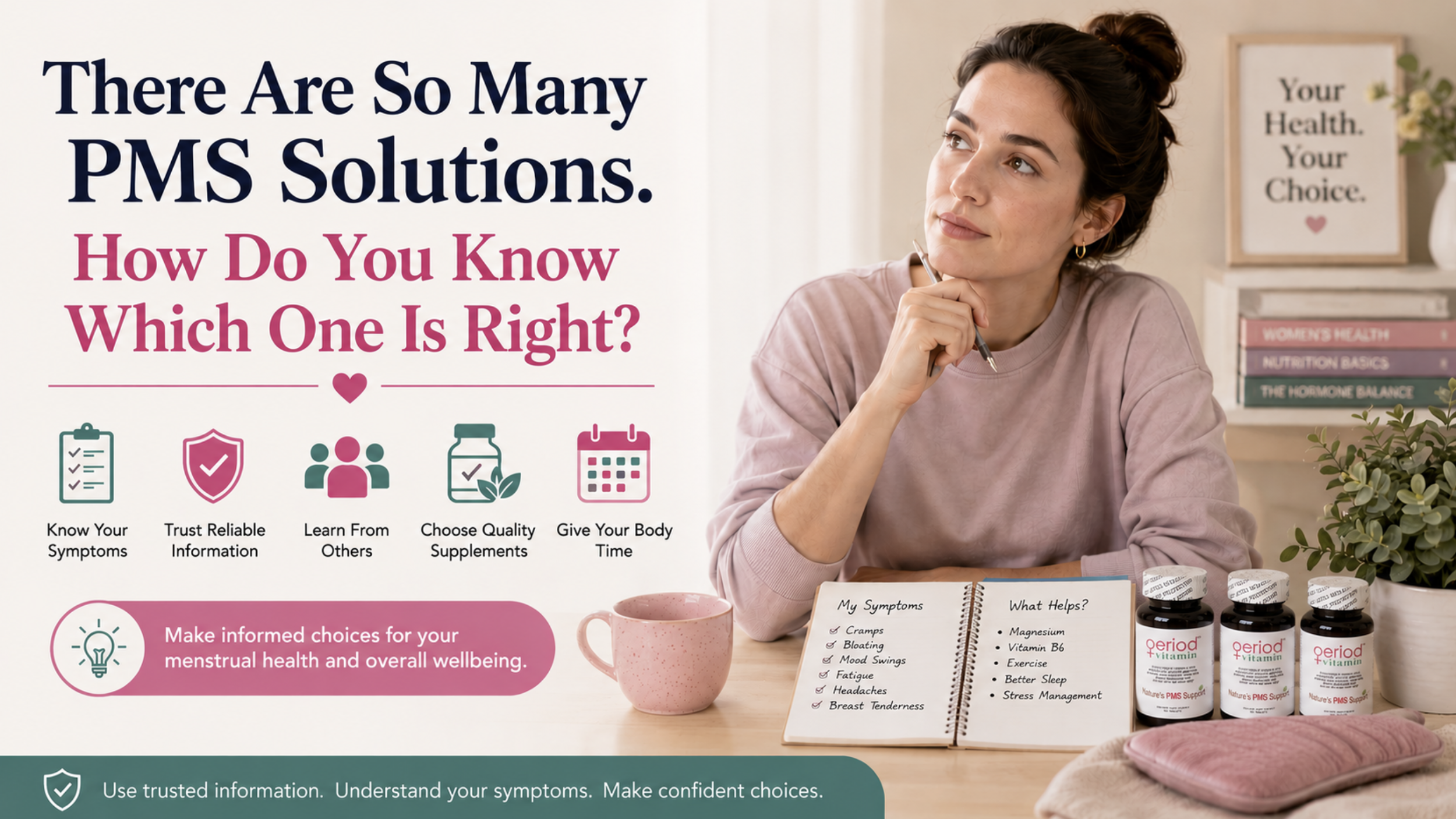
Some women mainly struggle with cramps, while others experience bloating, mood changes, fatigue, headaches, breast tenderness, or food cravings. Because symptoms vary from person to person, what works well for someone else may not be the best solution for you.
Before purchasing any product, take a few minutes to identify your most common symptoms and when they occur during your menstrual cycle. Tracking your symptoms for two or three months can help you recognize patterns and make more informed decisions.
The American College of Obstetricians and Gynecologists (ACOG) recommends tracking menstrual symptoms because it helps both you and your healthcare provider identify patterns, evaluate symptom severity, and determine whether additional evaluation or treatment may be appropriate.
Look for Reliable Information
The internet is full of advice, but not all of it is accurate.
When researching PMS solutions, prioritize information from trusted organizations and healthcare professionals. Good resources include:
- American College of Obstetricians and Gynecologists (ACOG)
- Office on Women’s Health
- National Institutes of Health (NIH)
These organizations provide evidence based information about menstrual health, lifestyle strategies, and treatment options.
Learn From Other Women’s Experiences
Online communities can also be valuable, especially when you want to hear how other women manage similar symptoms.
Discussion forums, Reddit communities, Facebook groups, and women’s health blogs often include honest conversations about what people have tried, what helped them, and what didn’t.
Keep in mind that personal experiences are not the same as scientific evidence. What works well for one woman may not work for another, so use these conversations as ideas rather than medical advice.
What to Look for in a PMS Supplement
If you’re considering a nutritional supplement, ask a few important questions before buying:
- Is it formulated specifically for women’s menstrual health?
- Does it contain evidence supported ingredients?
Research has shown that certain nutrients, including calcium, magnesium, and vitamin B6, may help support women experiencing some PMS symptoms when dietary intake is insufficient. However, not every supplement contains clinically relevant amounts, so always read the Supplement Facts label carefully and consult your healthcare provider if you have questions. The National Institutes of Health Office of Dietary Supplements offers evidence based fact sheets on many of these nutrients. - Are the ingredient amounts clearly listed?
- Is it manufactured by a reputable company?
- Does the company provide transparent information about quality and safety?
Remember that supplements are designed to support overall health. They work best when combined with a balanced diet, regular physical activity, quality sleep, and stress management.
Give Your Body Time
One of the biggest mistakes people make is expecting immediate results.
Unlike a pain reliever that may work within hours, nutritional support often takes time. Many healthcare professionals recommend trying a new supplement or wellness routine consistently for at least two or three menstrual cycles before deciding whether it is helping.
Consistency is often more important than finding the “perfect” product.
This is because nutritional support is intended to complement your body’s normal physiology rather than provide immediate symptom relief. Consistent healthy habits including balanced nutrition, regular exercise, adequate sleep, and stress managementoften work together over time to support menstrual wellness.
Make an Informed Decision
The best PMS solution is not necessarily the one with the biggest marketing budget or the most dramatic promises.
Instead, choose products and strategies that are supported by credible information, fit your individual symptoms, and align with a healthy lifestyle.
When you’re informed, you can make decisions with confidence instead of feeling overwhelmed by endless choices.
And if your PMS symptoms are severe, interfere with your daily life, or suddenly become worse, talk with your healthcare provider. They can help determine whether another condition may be contributing to your symptoms and recommend the most appropriate treatment options.