Many women have been told the same thing for years.
“It is just PMS.”
“Your hormones are all over the place.”
“You are probably just stressed.”
But PMS is not that simple.
Newer research and women’s health experts are helping us understand premenstrual symptoms in a more compassionate and realistic way. The issue is not always that your body has too many hormones or that your hormones are “bad.” For many women, symptoms before a period may be connected to how the body responds to normal hormone changes.
That means your symptoms are real, even if your hormone levels look normal. It also means you do not need to blame yourself, push harder, or assume something is wrong with you every month.
Your menstrual cycle is a natural rhythm. But the way your brain, nervous system, stress response, sleep, nutrition, and lifestyle interact with that rhythm can influence how you feel before your period.
This article explains what current PMS and menstrual cycle research suggests, why hormone sensitivity matters, how stress and nutrients may play a role, and how to support your body in a balanced, evidence informed way.
PMS Is Real, But It Is Not Always Simple
PMS, or premenstrual syndrome, can include physical, emotional, and mental changes that happen before your period starts. Some women notice symptoms a few days before bleeding begins. Others feel changes one or two weeks before their period.
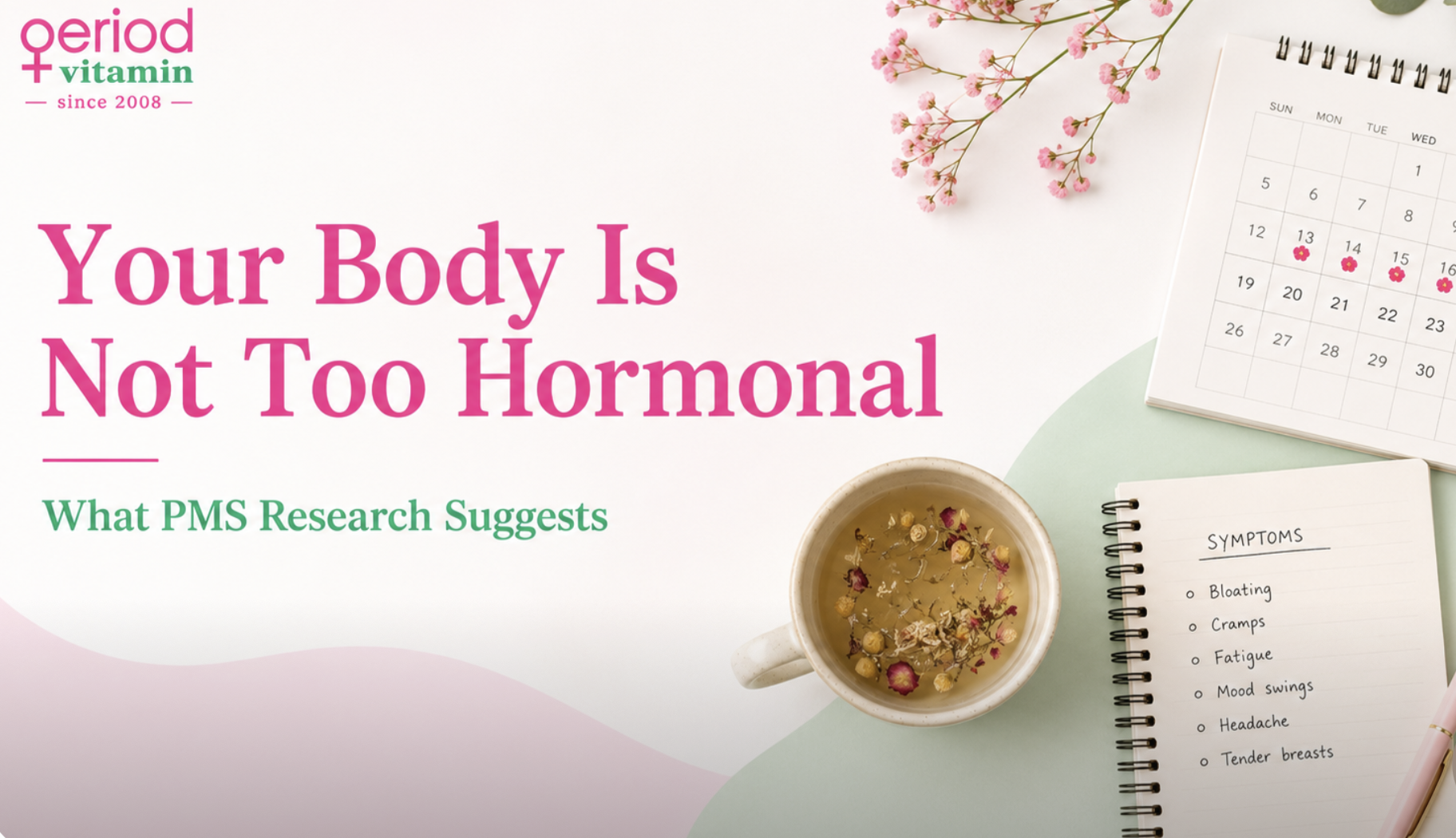
Common PMS symptoms may include bloating, breast tenderness, food cravings, fatigue, mood changes, irritability, acne, headaches, low motivation, sleep changes, and mild cramps.
For some women, these symptoms are manageable. For others, they can affect work, relationships, parenting, exercise, and daily life.
One of the most important things to understand is that PMS does not always come from one single cause. Your cycle hormones change every month, but your symptoms may depend on how sensitive your body is to those changes.
That is why two women can have similar hormone patterns but very different symptoms.
One woman may feel slightly tired before her period. Another may feel anxious, bloated, emotional, and exhausted. Both experiences can be real.
Your Hormones May Be Normal, But Your Body May Respond Differently
A major theme in PMS and PMDD research is hormone sensitivity.
PMDD, or premenstrual dysphoric disorder, is a more severe form of premenstrual symptoms. It can involve intense mood changes, depression, anxiety, irritability, anger, or feeling unable to function normally before a period.
Research suggests that many women with PMDD do not necessarily have abnormal hormone levels. Instead, their bodies may be more sensitive to normal estrogen and progesterone changes during the menstrual cycle.
This idea matters because many women feel confused when their lab results come back normal, yet their symptoms still feel very real.
A normal test result does not mean you are imagining your symptoms. It may mean that your body is responding strongly to normal hormonal shifts.
Hormones do not work alone. They interact with brain chemicals, sleep, stress, inflammation, genetics, and your nervous system. This is one reason PMS can feel different from woman to woman and even different from month to month.
For Period Vitamin readers, this is an important message:
Your body is not too hormonal. Your body may simply be responding to hormonal changes in a sensitive way.
PMS Is Not Just Stress, But Stress Can Make Symptoms Feel Worse
Stress is often part of the PMS conversation, but it should not be used to dismiss women’s symptoms.
It is not accurate or helpful to say, “You are just stressed.” PMS has a real biological pattern. Many women notice symptoms before their period month after month, even when life is going well.
At the same time, stress can influence how your body feels during the premenstrual phase. Poor sleep, emotional pressure, overworking, intense exercise, skipped meals, and high daily stress may make the days before your period feel harder.
Your body already goes through natural changes before menstruation. If your stress load is high, your nervous system may feel less resilient. You may notice more cravings, stronger mood changes, more fatigue, or more tension in the body.
This does not mean stress causes every PMS symptom. It means stress can be one layer in the bigger picture.
A helpful way to think about it is this:
Your cycle creates a natural shift. Your lifestyle and stress load can influence how strongly you feel that shift.
That is why small habits may matter more than you think. Eating enough, sleeping well, staying hydrated, walking, taking breaks, and supporting your nutrient intake can all be part of a more supportive menstrual wellness routine.
Mayo Clinic also notes that lifestyle habits such as sleep, exercise, food choices, and stress management may be part of a broader PMS support plan. This does not mean PMS is only a lifestyle issue, but it does show why daily habits can influence how you feel before your period.
Every Woman’s Cycle Pattern Is Personal
Social media often makes the menstrual cycle sound predictable for everyone.
You may hear things like:
“You will feel confident during ovulation.”
“You will feel tired in your luteal phase.”
“You should train this way during this phase.”
“You should eat these exact foods before your period.”
Some women do notice patterns that match this kind of advice. But not every woman does.
Research on mood, stress, sociability, and cycle phases suggests that menstrual cycle patterns can be highly individual. Some women feel more sensitive before their period. Some feel more hungry. Some feel more tired. Some feel almost no changes at all.
Your body may not follow someone else’s cycle chart perfectly.
That is why tracking your own symptoms can be so helpful. Instead of assuming what should happen, you can observe what actually happens in your body.
You can track things like mood, energy, sleep, cravings, bloating, breast tenderness, acne, headaches, digestion, workouts, and stress. After two or three cycles, you may start to see patterns.
Maybe you need more sleep the week before your period.
Maybe your cravings increase when you skip meals.
Maybe bloating feels worse when you eat more salty foods.
Maybe your workouts feel strong until the day right before your period.
Maybe your mood changes are more intense during stressful months.
These patterns are useful. They help you support your body with more awareness and less guessing.
Cycle Awareness Should Support You, Not Pressure You
Cycle syncing has become popular in women’s wellness. The idea is to adjust food, exercise, work, and self care based on the phase of your menstrual cycle.
There can be value in this when it helps you listen to your body.
For example, if you notice that your energy dips before your period, you might choose lighter workouts, more walking, earlier bedtime, warm meals, and fewer unnecessary commitments.
If you notice stronger cravings in the days before bleeding starts, you might focus on balanced meals with protein, fiber, healthy fats, and mineral rich foods.
If you feel more emotional, you might give yourself extra space, journaling, quiet time, or supportive conversation.
But cycle awareness should never become another strict rulebook.
You do not need to live perfectly according to four cycle phases. You do not need to change your entire routine every week. You do not need to feel guilty if your body does not match the chart.
The best approach is flexible.
Listen to your body. Notice your patterns. Adjust gently when needed.
Your cycle should give you information, not pressure.
Cleveland Clinic explains cycle syncing as the practice of adjusting habits like food, movement, and self care around menstrual cycle phases. For many women, the most useful part is not following strict rules, but becoming more aware of how energy, appetite, mood, and recovery may shift throughout the month.
Nutrients Matter Throughout The Entire Month
Nutrition is one of the most practical ways to support menstrual wellness.
This does not mean food or supplements cure PMS. It means your body uses nutrients every day for normal body functions connected to mood, energy, blood health, muscle comfort, nervous system function, and overall well being.
Before and during your period, your body may especially benefit from steady nourishment.
For example, magnesium supports normal muscle and nerve function. Vitamin B6 contributes to normal hormone activity. Iron supports oxygen transport and is especially important for women who lose blood during menstruation. Zinc supports normal reproductive health and immune function. Vitamin D supports immune and overall wellness.
Calcium and magnesium are two nutrients that women’s health experts often discuss in relation to PMS support. Some women may also pay attention to iron if they have heavy periods, low energy, or signs of low iron.
Food should always be the foundation. A supportive menstrual wellness diet may include protein, vegetables, fruits, whole grains, legumes, nuts, seeds, healthy fats, and iron rich foods.
But many women also choose supplements to help fill nutrient gaps and support consistency.
That is where Period Vitamin can fit into a healthy routine.
Period Vitamin is designed to support menstrual wellness and overall well being with nutrients that help support the body throughout the month. It is not a cure or quick fix. It is part of a bigger picture that also includes food, sleep, hydration, movement, and stress care.
The National Institutes of Health explains that magnesium supports many normal body functions, including muscle and nerve function. This is one reason magnesium is often discussed in menstrual wellness education, especially for women who want to support their body before and during their period.
Hormone Support Does Not Mean Fighting Your Hormones
The phrase “hormone support” is everywhere. But it is important to understand what it really means.
Your hormones are not the enemy. They are chemical messengers that help coordinate many functions in the body, including your menstrual cycle.
Supporting your hormones does not mean forcing your body into a perfect cycle or trying to erase every symptom.
A better way to think about hormone support is supporting the body systems that interact with your cycle.
This includes your nervous system, sleep, stress response, blood sugar balance, nutrient intake, digestion, and overall wellness.
When these areas are supported, your body may feel more steady throughout the month.
That does not mean you will never have PMS symptoms. Some cycle changes are normal. But consistent support may help you feel more prepared, more aware, and more connected to your body.
Why Symptoms Can Feel Different Every Month
Many women wonder why PMS feels worse some months and easier other months.
This is common.
Your hormones naturally fluctuate, but your lifestyle also changes from month to month. Sleep, stress, food, workouts, travel, illness, alcohol, caffeine, hydration, and emotional load can all influence how you feel.
One month, you may sleep well, eat consistently, and feel supported.
Another month, you may be stressed, under eating, training hard, sleeping less, or dealing with emotional pressure.
Your body notices these things.
This is why it helps to look at PMS with curiosity instead of judgment. Rather than thinking, “Why am I like this?” try asking, “What was different this month?”
Did I sleep less?
Did I skip more meals?
Did I drink more caffeine?
Was I more stressed?
Did I train harder than usual?
Did I get enough iron rich foods?
Did I support my body before symptoms started?
These questions can help you learn from your cycle instead of feeling controlled by it.
When PMS May Be More Than PMS
Some premenstrual changes are common, but severe symptoms should not be ignored.
You may want to talk with a healthcare provider if your symptoms interfere with work, relationships, school, parenting, or daily life.
It is also important to seek support if you experience severe depression, anxiety, hopelessness, intense mood swings, very heavy bleeding, severe pelvic pain, symptoms that are getting worse, or thoughts of self harm.
Sometimes symptoms that seem like PMS may overlap with other health concerns, including PMDD, endometriosis, PCOS, thyroid issues, anemia, fibroids, migraines, depression, anxiety, or perimenopause.
Getting help does not mean you are weak. It means you are paying attention to your body.
Period Vitamin content should always encourage women to take severe or disruptive symptoms seriously. Nutrition and supplements can support wellness, but they are not a replacement for medical care.
A Balanced Way To Support Your Body Before Your Period
You do not need a complicated routine to support your body before your period.
Start with the basics.
Eat enough food. Include protein with meals. Add colorful fruits and vegetables. Choose mineral rich foods. Stay hydrated. Prioritize sleep. Move your body in a way that feels supportive. Track your symptoms. Reduce unnecessary stress where you can.
If cravings are strong, try balanced meals instead of restriction.
If bloating is common, pay attention to salt, hydration, digestion, and meal timing.
If breast tenderness appears every month, track when it starts and what makes it better or worse.
If your mood shifts, give yourself more rest, support, and compassion.
If fatigue is intense, look at sleep, food, stress, iron intake, and whether your symptoms should be discussed with a healthcare provider.
Small choices can add up over time.
The goal is not perfection. The goal is consistency.
Period Vitamin can be part of a consistent menstrual wellness routine, especially for women who want to support their body with key nutrients throughout the month. As always, supplements work best alongside balanced meals, sleep, hydration, movement, and medical care when symptoms are severe.
Final Takeaway
PMS is real, but it is not always simple.
New research and expert guidance suggest that premenstrual symptoms may involve hormone sensitivity, stress response, nutrient status, nervous system function, and personal cycle patterns.
This means your symptoms are not imaginary. It also means there is no single magic solution for every woman.
The best approach is balanced and consistent.
Track your cycle. Nourish your body. Support your sleep. Manage stress where you can. Move in ways that feel good. Use supplements thoughtfully. Ask for medical support when symptoms are severe or disruptive.
You are not too hormonal.
You are cyclical.
And your body deserves support all month long.
Not always. PMS symptoms may be related to normal hormone changes and how your body responds to those changes. Stress, sleep, nutrition, and individual sensitivity may also play a role.
Yes. Some women may have normal hormone levels but still feel strong symptoms because their body may be more sensitive to normal hormonal shifts.
Stress is not the only cause of PMS, but it can influence how symptoms feel. High stress, poor sleep, skipped meals, and overworking may make the premenstrual phase feel harder for some women.
Not necessarily. Cycle awareness can be helpful, but every woman’s pattern is different. It is better to track your own symptoms and adjust gently instead of following rigid rules.
Nutrients such as magnesium, vitamin B6, iron, zinc, calcium, and vitamin D all support important body functions related to menstrual wellness, mood, energy, and overall health.
No. Period Vitamin is a dietary supplement designed to support menstrual wellness and overall well being. It is not intended to diagnose, treat, cure, or prevent any disease.
Talk to a healthcare provider if symptoms are severe, disruptive, getting worse, or affecting your daily life. You should also seek help for severe mood changes, heavy bleeding, intense pain, or thoughts of self harm.