Table of Contents
- Is It Normal for PMS to Change Every Month?
- What Causes PMS?
- Why Hormones Aren’t Exactly the Same Every Cycle
- 10 Reasons Your PMS Symptoms May Be Different Each Month
- Which Symptoms Commonly Change?
- When PMS Changes Could Signal Something Else
- How to Support Your Body Throughout Your Cycle
- Frequently Asked Questions
- Key Takeaways
Why PMS Symptoms Can Feel Different Every Month
Have you ever wondered why one month your biggest PMS complaint is bloating, the next month it’s mood swings, and another month you barely notice any symptoms at all?
You’re not imagining it.
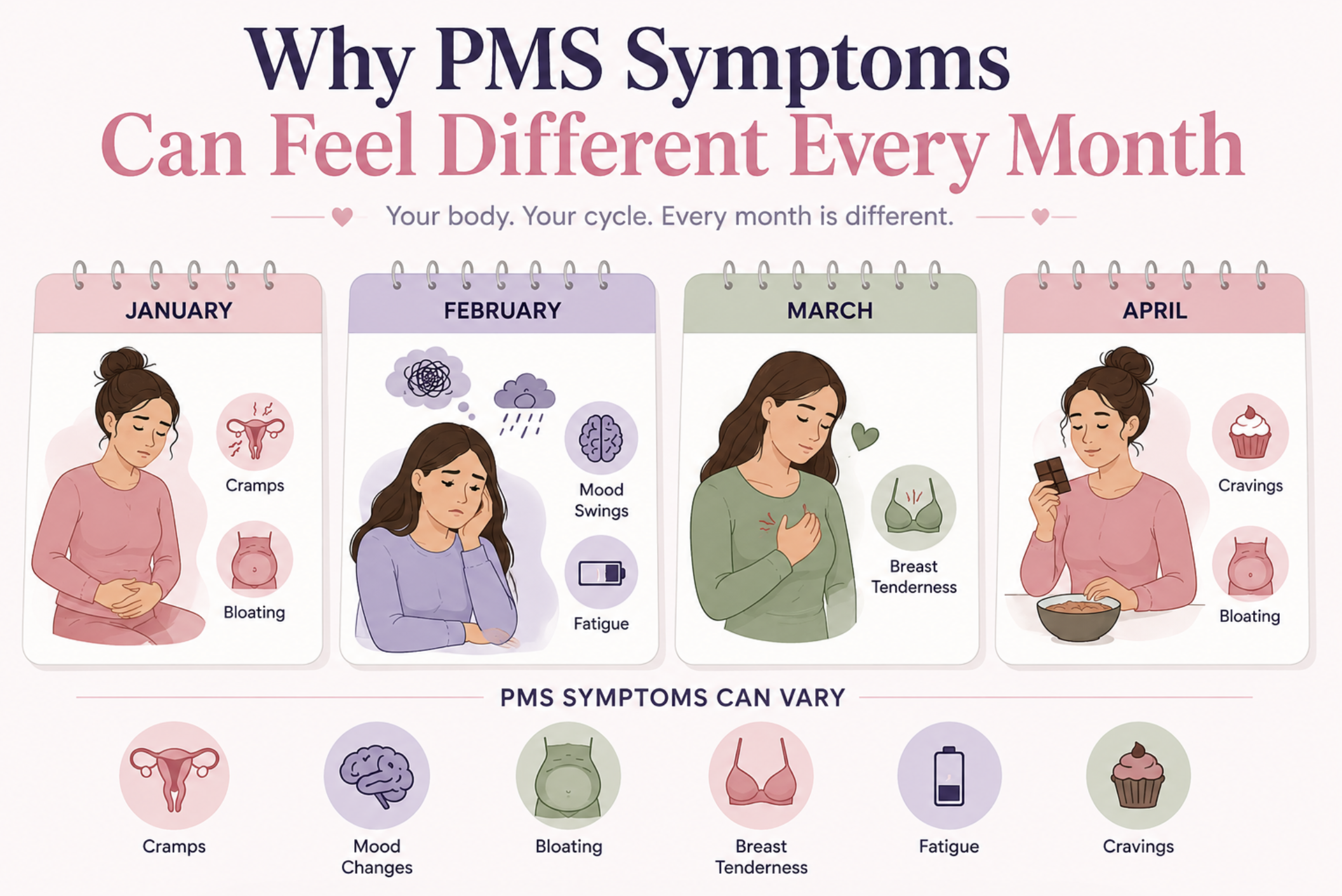
Many women expect PMS to be exactly the same every month. In reality, your menstrual cycle is dynamic. Even if your cycle length stays fairly consistent, the intensity and combination of symptoms can naturally change from month to month.
That doesn’t necessarily mean something is wrong.
Your hormones respond to many factors including stress, sleep, nutrition, illness, exercise habits, and even normal aging. Because these influences change over time, your PMS symptoms may change too.
Understanding why this happens can help you feel more confident about your body and recognize when changes are part of normal menstrual health.
Is It Normal for PMS to Change Every Month?
Yes.
For many women, PMS symptoms naturally vary from cycle to cycle.
You might experience:
- Strong cramps one month
- Breast tenderness another month
- Increased food cravings the following month
- Little to no symptoms during another cycle
This variation is common because the menstrual cycle isn’t identical every month. Your body constantly responds to internal and external influences.
Research suggests that while hormone patterns generally follow the same phases each month, symptom severity can vary considerably between cycles.
What Causes PMS?
PMS (Premenstrual Syndrome) is believed to result from the body’s response to hormonal changes after ovulation and before menstruation.
During the second half of your cycle:
- Progesterone rises
- Estrogen fluctuates
- Brain chemicals such as serotonin may also change
These hormonal shifts can influence:
- Mood
- Appetite
- Energy
- Sleep
- Breast tissue
- Fluid balance
- Digestive function
The exact combination differs from person to person.
Why Hormones Aren’t Exactly the Same Every Cycle
Many people think hormones follow identical patterns every month.
They don’t.
Even healthy menstrual cycles involve small variations in:
- Ovulation timing
- Hormone levels
- Follicle development
- Egg maturation
- Stress hormone activity
These small differences can affect how you feel.
Think of your cycle like the weather.
Summer is generally warm, but every day isn’t exactly the same temperature.
Your menstrual cycle follows predictable phases, but each month has its own unique “weather.”
10 Reasons Your PMS Symptoms May Be Different Each Month
1. Everyday Stress
Stress is one of the biggest reasons PMS symptoms can feel different.
When you’re under stress, your body produces more cortisol.
Higher stress levels may influence:
- Mood changes
- Fatigue
- Sleep quality
- Food cravings
- Headaches
Many women notice stronger PMS during particularly stressful months.
2. Sleep Changes
Poor sleep doesn’t just leave you tired.
It may also affect:
- Mood
- Pain sensitivity
- Hunger hormones
- Energy levels
- Emotional resilience
Just a few nights of inadequate sleep before your period can make PMS feel more intense.
3. Nutrition
What you eat throughout the month can influence how you feel before your period.
A balanced eating pattern that includes:
- Fruits
- Vegetables
- Whole grains
- Healthy fats
- Lean proteins
helps support overall health.
Some women also choose foods naturally rich in magnesium, iron, vitamin B6, and omega 3 fats as part of a balanced diet.
4. Physical Activity
Regular movement supports overall health.
Many women report feeling better when they stay active throughout the month.
Exercise may help support:
- Mood
- Sleep
- Energy
- Circulation
- Stress management
Skipping your usual routine for several weeks may leave you feeling different during PMS.
5. Illness or Recovery
Even a minor cold can temporarily change how your body feels.
Recovering from illness may leave you more tired, making PMS symptoms seem stronger.
6. Life Changes
Major life events affect your body.
Examples include:
- Moving
- Traveling
- Starting a new job
- Relationship changes
- Caring for family members
Periods of transition often come with higher stress, which may influence premenstrual symptoms.
7. Aging
Hormones naturally change over time.
Women may notice PMS evolving during:
- Their 20s
- Their 30s
- Their 40s
- Perimenopause
Some symptoms become milder while others become more noticeable.
8. Ovulation Differences
Not every ovulation is identical.
Small variations in ovulation timing may influence:
- Breast tenderness
- Cramping
- Cervical mucus
- Mood changes
These differences are often completely normal.
9. Lifestyle Habits
Daily habits matter.
Changes in:
- Alcohol intake
- Smoking
- Caffeine consumption
- Hydration
- Work schedules
may affect how you experience PMS.
10. Individual Hormone Sensitivity
Interestingly, two women can have very similar hormone levels yet experience completely different symptoms.
Researchers believe some women are simply more sensitive to normal hormonal changes than others.
This helps explain why PMS experiences are highly individual.
Which PMS Symptoms Commonly Change?
| Symptom | May Vary Month to Month? |
|---|---|
| Mood swings | Yes |
| Breast tenderness | Yes |
| Bloating | Yes |
| Fatigue | Yes |
| Food cravings | Yes |
| Acne | Yes |
| Headaches | Yes |
| Mild cramps | Yes |
| Sleep changes | Yes |
| Irritability | Yes |
Almost any PMS symptom may fluctuate in intensity from one cycle to the next.
Tracking Your Symptoms Can Reveal Patterns
Because symptoms naturally change, keeping a simple menstrual journal can be helpful.
Consider tracking:
- First day of your period
- Mood
- Sleep
- Energy
- Cravings
- Exercise
- Stress level
- Breast tenderness
- Cramps
- Headaches
- Bloating
After several months, many women begin to recognize personal patterns.
This information can also be useful to discuss with a healthcare provider if symptoms become disruptive.
When PMS Changes Could Signal Something Else
Although some variation is normal, it’s a good idea to speak with a healthcare provider if you notice:
- Sudden severe symptoms you’ve never experienced before
- Symptoms that interfere with work, school, or daily life
- Heavy menstrual bleeding
- Severe pelvic pain
- Periods becoming very irregular
- Symptoms that continue well after your period begins
- Depression or anxiety that feels overwhelming
- Bleeding between periods
These changes deserve medical evaluation to rule out other conditions.
How to Support Your Body Throughout Your Cycle
You cannot completely control hormone fluctuations, but healthy daily habits can support overall menstrual wellness.
Prioritize Sleep
Aim for consistent, quality sleep whenever possible.
Manage Stress
Helpful options include:
- Walking
- Yoga
- Meditation
- Deep breathing
- Journaling
- Spending time outdoors
Eat Balanced Meals
Focus on:
- Protein
- Fiber-rich carbohydrates
- Healthy fats
- Colorful vegetables
- Fruits
Stay Hydrated
Proper hydration supports many normal body functions.
Keep Moving
Even gentle exercise may support overall well-being during your cycle.
Consider Nutritional Support
Some women choose nutritional supplements designed to support menstrual wellness alongside a healthy diet and lifestyle.
If you’re considering supplements, speak with your healthcare provider to determine what’s appropriate for your individual needs.
The Bottom Line
PMS isn’t always predictable.
Your body changes from month to month, and so can your symptoms.
Factors like stress, sleep, nutrition, exercise, illness, age, and normal hormonal fluctuations all play a role in how you feel before your period.
While some variation is completely normal, tracking your symptoms can help you better understand your cycle and recognize when changes are worth discussing with a healthcare provider.
Rather than expecting every month to feel exactly the same, learning your body’s unique patterns can help you approach your menstrual cycle with greater confidence and awareness.
Frequently Asked Questions
Why is my PMS worse some months than others?
Stress, poor sleep, changes in physical activity, illness, nutrition, and natural hormonal variation can all influence how intense PMS feels from one cycle to the next.
Is it normal for my symptoms to change every month?
Yes. Many women experience different combinations or intensities of PMS symptoms across different menstrual cycles.
Can stress make PMS worse?
Stress may increase feelings of fatigue, irritability, headaches, and mood changes, making PMS seem more noticeable for some women.
Does age affect PMS?
Yes. Hormonal changes throughout adulthood, especially during perimenopause, may change how PMS feels over time.
ould I worry if my PMS suddenly changes?
Mild variation is common. However, sudden severe symptoms, unusually heavy bleeding, significant pelvic pain, or symptoms that interfere with daily life should be evaluated by a healthcare provider.
Key Takeaways
- PMS symptoms don’t have to be identical every month.
- Normal hormonal fluctuations naturally vary from cycle to cycle.
- Stress, sleep, nutrition, exercise, illness, and aging can all influence symptom intensity.
- Tracking your cycle may help you recognize personal patterns.
- Significant or severe changes should be discussed with a healthcare provider.
Every menstrual cycle is unique, and understanding your body’s patterns can help you feel more prepared each month. Always consult your healthcare provider if you have concerns about new or severe symptoms.
- Why Are MY Breasts Sore After MY Period? How To Get Relief
- Why Do You Feel So Emotional Before Your Period
- 5 Signs Your Body May Need More Iron During Your Period
- How To Reduce PMS Symptoms Naturally – The Best PMS Remedies
- Five Exercises to Reduce PMS Bloating
- Discover the Best Home Remedies to Eliminate PMS Mood Swings
References
- American College of Obstetricians and Gynecologists (ACOG). Premenstrual Syndrome (PMS).
- Office on Women’s Health. Premenstrual Syndrome.
- National Institutes of Health. Research on Premenstrual Syndrome and Menstrual Health.
About Period Vitamin
For more than 18 years, Period Vitamin has focused on supporting women’s menstrual wellness through educational resources and nutritional supplements. Our articles are based on current scientific evidence and guidance from trusted health organizations. They are intended for educational purposes only and are not a substitute for professional medical advice.