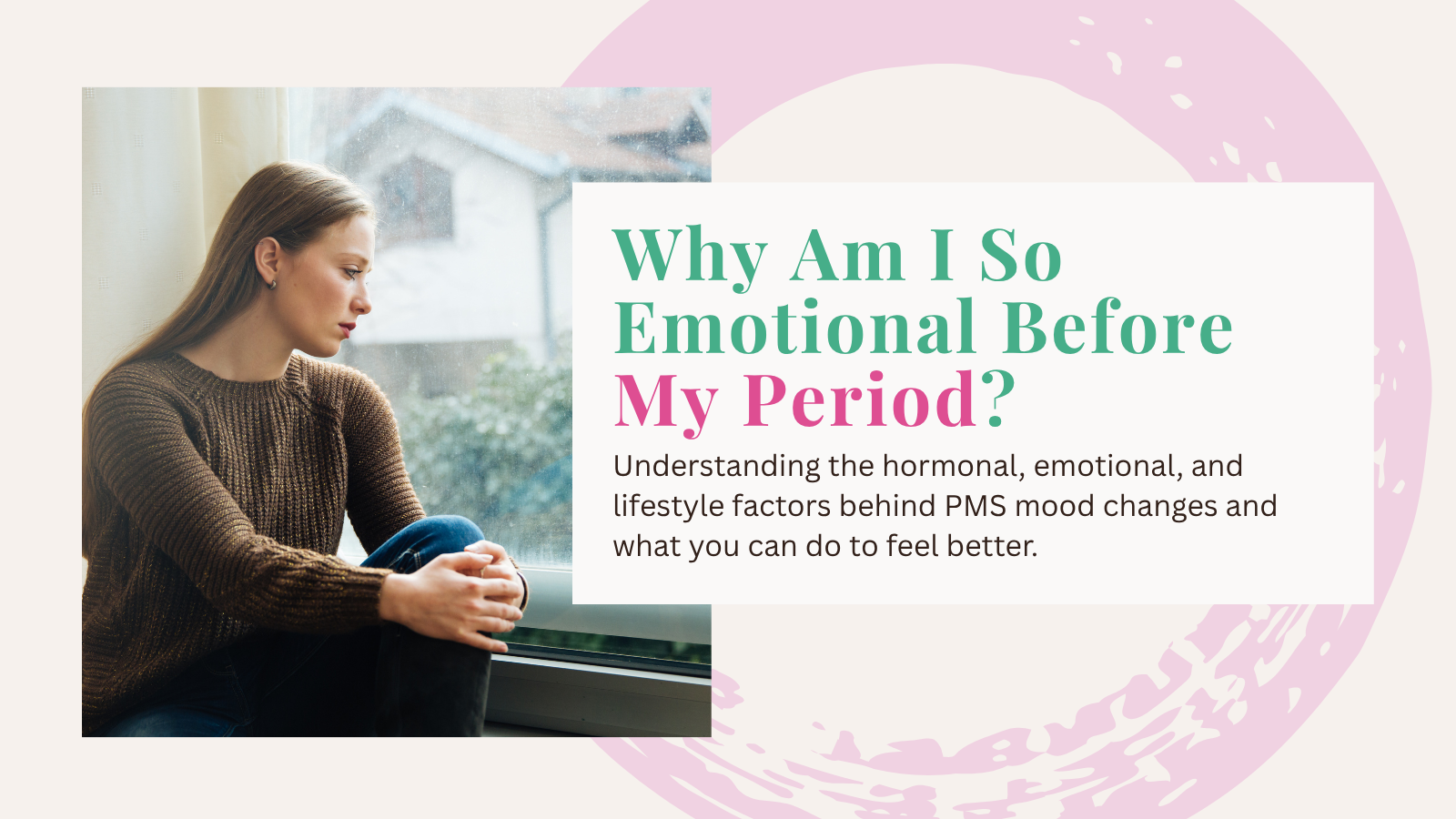
Have you ever found yourself crying over a commercial, feeling irritated by things that normally wouldn’t bother you, or wondering why your emotions suddenly feel so much bigger in the week before your period?
If so, you’re far from alone.
Many women notice emotional changes during the days leading up to menstruation. You may feel more sensitive, overwhelmed, anxious, impatient, or even disconnected from yourself. These feelings can be confusing especially if they seem to disappear a few days later.
The important thing to know is this:
Your emotions are real. They are not “just in your head.” And they don’t mean you’re weak.
Instead, they’re often part of the remarkable conversation happening between your hormones, brain, nervous system, nutrition, sleep, stress, and overall health.
Your Hormones and Your Brain Are Closely Connected
Throughout your menstrual cycle, estrogen and progesterone naturally rise and fall. These hormones don’t only influence your reproductive system they also communicate with your brain.
Estrogen supports several neurotransmitters involved in mood, including serotonin and dopamine, which are associated with feelings of well being, motivation, and emotional stability.
After ovulation, estrogen begins to decline while progesterone rises. As your body prepares for a possible pregnancy, these changing hormone levels can influence the brain’s chemistry in ways that make emotions feel more intense.
Then, if pregnancy doesn’t occur, both estrogen and progesterone drop rapidly before menstruation begins.
For some women, this transition is barely noticeable.
For others, it can feel like an emotional roller coaster.
It’s Not Just About Hormones
Hormones may set the stage, but they are only one part of the picture.
Think of your body like an orchestra. Hormones are important musicians but they’re not the only ones playing.
Other factors can amplify emotional symptoms before your period, including:
- Chronic stress
- Poor sleep
- Blood sugar fluctuations
- Nutrient deficiencies
- Low physical activity
- High alcohol intake
- Ongoing anxiety or depression
- An already overloaded schedule
When your nervous system is already carrying a heavy burden, the natural hormonal shifts before menstruation can feel much harder to navigate.
This is one reason why some months feel manageable while others leave you wondering what happened.
Your Brain Becomes More Sensitive
Research suggests that women with PMS or PMDD don’t necessarily produce different hormone levels than women without symptoms.
Instead, their brains may respond differently to those normal hormonal changes.
It’s a bit like having a more sensitive thermostat.
The room temperature hasn’t changed dramatically but your thermostat notices every small shift.
This helps explain why two women with similar hormone levels can have very different emotional experiences.
Common Emotional Symptoms Before a Period
Every woman experiences her cycle differently, but common emotional changes include:
- Feeling unusually emotional
- Crying more easily
- Irritability
- Mood swings
- Anxiety
- Feeling overwhelmed
- Increased sensitivity
- Low motivation
- Difficulty concentrating
- Feeling withdrawn
- Wanting more time alone
- Reduced patience
These symptoms often begin several days before menstruation and improve once the period starts.
Your Body May Need More Support During This Time
Rather than fighting your body, it can help to support it.
Small, consistent habits often have a greater impact than searching for one perfect solution.
Some of the most helpful foundations include:
Prioritize Stable Blood Sugar
Eating regular meals that include protein, healthy fats, fiber, and complex carbohydrates helps provide your brain with a steady supply of energy.
Large swings in blood sugar can make mood changes feel even more intense.
Protect Your Sleep
Sleep and emotional regulation are deeply connected.
Even one or two nights of poor sleep can increase irritability, emotional sensitivity, and stress.
Aim for consistent, high-quality sleep whenever possible.
Move Your Body
You don’t have to do an intense workout.
A walk outside, yoga, strength training, stretching, or gentle movement can help regulate stress hormones and support mood.
Support Your Stress Response
Your body cannot always distinguish between work stress, relationship stress, financial stress, or lack of rest.
They all contribute to your overall stress load.
Simple practices like deep breathing, meditation, journaling, spending time in nature, or simply saying “no” more often can help calm your nervous system.
Nutrition Matters More Than Many Women Realize
The brain depends on vitamins and minerals every single day.
Some nutrients play important roles in normal nervous system function, energy production, neurotransmitter production, and hormonal activity.
A balanced diet rich in whole foods is always the foundation.
Some women also choose nutritional supplements as part of their monthly wellness routine to help fill nutritional gaps and consistently support their bodies throughout the menstrual cycle.
When Emotional Symptoms Become Severe
While emotional changes before a period are common, they should not be ignored if they become overwhelming.
If mood changes significantly interfere with work, relationships, daily life, or you experience severe depression, hopelessness, or thoughts of self harm, it’s important to seek evaluation from a qualified healthcare professional.
Conditions such as Premenstrual Dysphoric Disorder (PMDD), anxiety disorders, depression, thyroid conditions, or other medical issues may require additional care.
You deserve support, and effective treatment options are available.
The Bottom Line
Your emotions before your period are not a character flaw.
They are a signal.
A signal that your brain, hormones, nervous system, and overall health are interacting in complex and meaningful ways.
Instead of asking, “What’s wrong with me?”
Try asking,
“What might my body be asking for right now?”
Sometimes the answer is more rest.
Sometimes it’s better nourishment.
Sometimes it’s stress reduction.
Sometimes it’s talking with a healthcare professional.
Your cycle isn’t working against you.
It’s communicating with you.
The more you learn to listen with curiosity instead of frustration, the more supported and empowered you may feel every month.