There are days before your period when your stomach seems to have a mind of its own.
Your jeans suddenly feel tighter. Your lower belly looks fuller by afternoon. You may wake up feeling fairly normal and wonder how you became so uncomfortable by dinner.
When that happens, exercise may be the last thing you feel like doing. Curling up on the couch sounds much more appealing than putting on workout clothes. But you do not need an intense workout to help your body feel better.
Gentle movement can be surprisingly helpful when PMS bloating hits, particularly when part of that uncomfortable fullness is related to sluggish digestion, constipation, or fluid retention. Bloating is a recognized physical symptom of PMS, and digestive changes such as constipation or diarrhea can occur around the same time.
Regular aerobic activity is also recommended as part of an overall approach to managing PMS symptoms. The important part is choosing movement that feels good in your body instead of assuming you need to punish your bloated stomach with endless crunches.
Gentle movement can be surprisingly helpful when PMS bloating hits, particularly when part of that uncomfortable fullness is related to sluggish digestion, constipation, or gas. The Office on Women’s Health notes that physical activity may also help improve premenstrual symptoms, even during the part of your cycle when your energy feels lower.
Why Do You Feel So Bloated Before Your Period?
PMS bloating is not necessarily the same thing as gaining body fat. Hormonal changes, temporary fluid retention, constipation, and changes in digestion can all affect how your stomach feels and how your clothes fit before your period. If the number on the scale tends to change at the same time, you may also want to read our guide to PMS weight gain and what may help.
Hormonal changes in the days leading up to menstruation can be accompanied by fluid retention, while changes in digestion can leave you feeling gassy, constipated, or simply fuller than usual. This is why the sensation can vary so much from one month to another.
Sometimes you feel generally puffy. Other times the pressure seems concentrated in your abdomen. You might even notice that your waistband becomes uncomfortable at the end of the day even though you have not changed anything significant about the way you eat.
Movement will not magically switch off the hormonal changes happening before your period, but it may help with some of the things contributing to that heavy, uncomfortable feeling.
Here are five exercises worth trying.
1. Take a 20 to 30 Minute Walk
Walking may be one of the simplest places to start when you feel bloated. You do not need a gym or a strenuous workout to make movement worthwhile. Put on comfortable shoes and walk at a pace that gets your body moving without leaving you exhausted. The NHS recommends regular exercise to support digestion and notes that exercise can also help when you are already feeling bloated.
If you feel particularly uncomfortable, start with ten minutes instead of convincing yourself that a workout only “counts” if you exercise for half an hour.
You may find that once you begin walking, your body loosens up and you naturally want to continue. A walk after a meal can be an especially easy habit to experiment with during the week before your period.
2. Try Cat Cow Stretch
If your abdomen feels tight and your lower back is uncomfortable at the same time, Cat Cow is a lovely gentle movement to try. Start on your hands and knees with your wrists underneath your shoulders and your knees underneath your hips.
As you inhale, gently allow your belly to move downward while lifting your chest slightly. Then exhale and slowly round your spine, allowing your head to relax toward the floor. Move back and forth slowly for about eight to twelve repetitions.
There is no need to pull your stomach in aggressively or force a deep stretch. Think of it as creating movement through your abdomen, back, and pelvis. This can feel particularly good on days when bloating makes your entire midsection feel stiff.
3. Bring Your Knees Toward Your Chest
You may already do this instinctively when your stomach feels uncomfortable.
Lie comfortably on your back with your knees bent. Slowly bring both knees toward your chest and hold them gently with your hands. You can remain still for several breaths or slowly rock from side to side if that feels comfortable. Stay here for about 20 to 30 seconds, release your legs, and repeat several times.
Instead of trying to force your abdomen flat, allow your stomach to relax while you breathe. This position can be particularly soothing when your bloating feels more like digestive fullness or trapped gas than general puffiness.
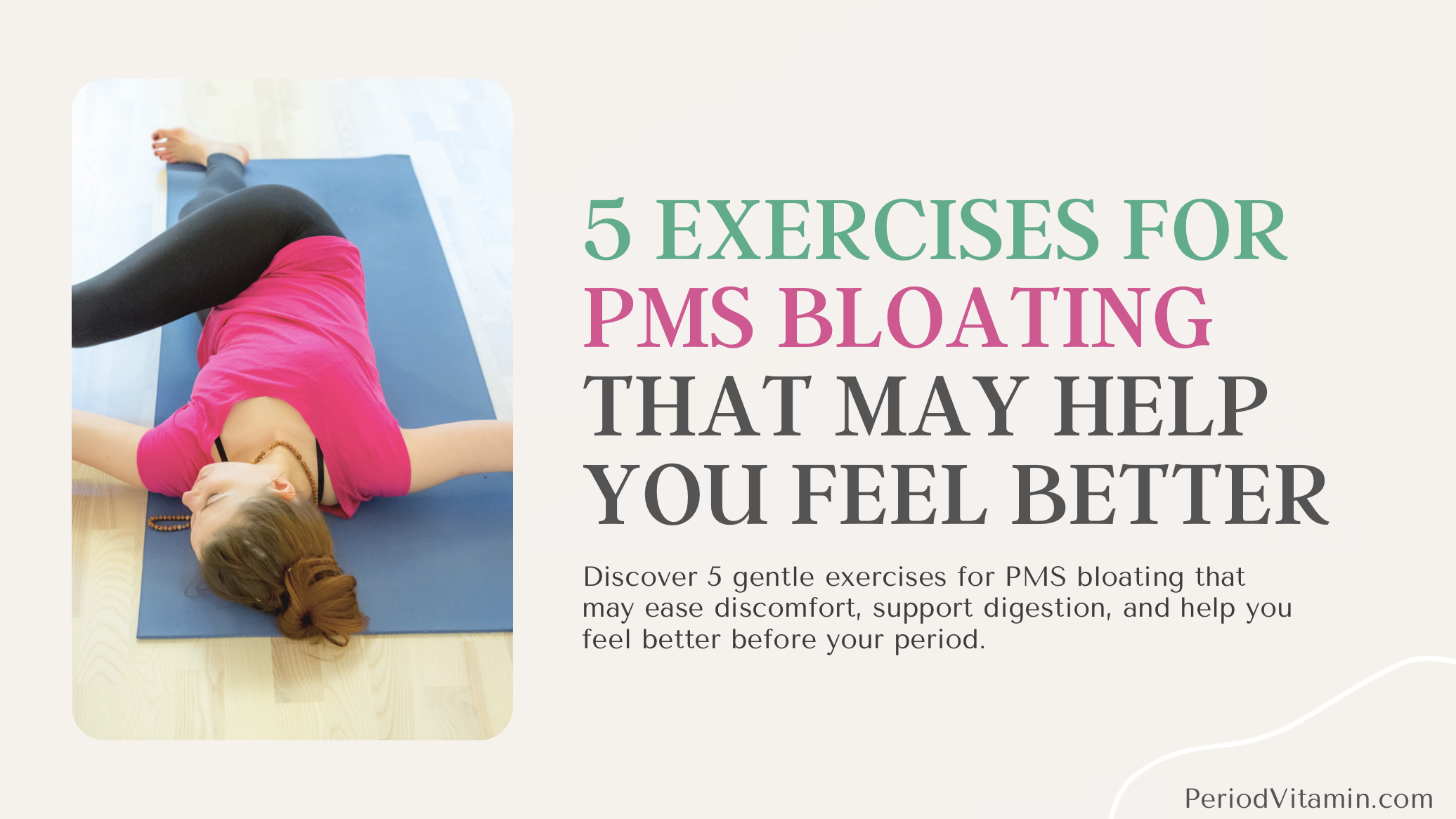
4. Do a Gentle Supine Twist
Another simple movement you can do without leaving your bedroom is a lying spinal twist.
Lie on your back, bend your knees, and keep your feet on the floor. Slowly allow both knees to fall toward one side while keeping your shoulders relaxed against the floor.
Hold the position comfortably for several breaths before returning to the center and repeating on the other side. You should feel a gentle stretch through your waist, hips, and lower back rather than a strong pull through your abdomen. Try spending 30 to 60 seconds on each side.
Yoga and relaxation techniques are among the lifestyle approaches that may help some women manage premenstrual symptoms, so a few gentle stretches can be a perfectly reasonable choice when a harder workout sounds miserable.
5. Try Light Cardio Instead of an Intense Ab Workout
If you enjoy going to the gym, you do not need to stop exercising simply because your period is approaching. But you also do not need to attack your abs because your stomach looks bigger.
Crunches, situps, and heavy abdominal workouts do not remove menstrual bloating. Your abdominal muscles and the fluid or digestive changes causing that bloated feeling are two different things.
Instead, try 15 to 30 minutes of comfortable cycling, elliptical training, swimming, or another form of aerobic movement you enjoy. The goal is to get your body moving at an intensity that feels manageable.
Some days you may feel perfectly capable of completing your normal workout. Other months, an easy walk and a few stretches may be exactly what your body wants. Both are legitimate forms of movement.
You Don’t Have to “Work Off” PMS Bloating
This is probably the most important thing to remember.
When your stomach suddenly looks bigger before your period, it is tempting to react by exercising harder, eating less, or worrying that you somehow gained weight overnight.
But PMS bloating commonly occurs alongside fluid retention and digestive changes. Your body may simply be moving through a temporary phase of your menstrual cycle.
Rather than treating exercise as punishment for looking bloated, use it as a way to support your body through those few uncomfortable days. That small change in mindset matters.
What Else Can Help With PMS Bloating?
Exercise works best as one part of a bigger picture.
Pay attention to hydration, sleep, regular meals, and how much sodium you are eating during the days when you tend to retain fluid. Mayo Clinic notes that regular aerobic exercise, adequate sleep, relaxation techniques, and limiting salt may help with premenstrual water retention.
If constipation tends to arrive before your period, that may be contributing to the feeling that your stomach is suddenly much larger. Water, appropriate dietary fiber, and regular movement can all support healthy digestion. It is also worth tracking your symptoms for a few cycles.
You might discover that your bloating reliably appears three or four days before your period and disappears shortly after bleeding begins. Simply knowing your pattern can make the symptom feel less mysterious and help you prepare for it.
Where Does Period Vitamin Fit In?
Your nutritional needs do not disappear just because PMS symptoms come and go. A balanced diet should always be the foundation, but some women also choose a supplement as part of their menstrual wellness routine.
Period Vitamin was designed to provide targeted nutritional and herbal support in one convenient formula for women who want additional support around their menstrual cycle.
Think of it as one part of the bigger picture rather than a quick fix for bloating. Movement, nutrition, hydration, sleep, stress management, and understanding your own cycle patterns all matter.
Your body is doing a lot in the days before your period. Sometimes supporting it can be much simpler than trying to fight every symptom.
A walk, a few gentle stretches, plenty of water, and a little patience with your body may be exactly what you need.
When PMS Bloating Deserves a Closer Look
Some bloating around your period can be normal, but you do not have to automatically blame every swollen or uncomfortable stomach on PMS.
If bloating becomes severe, persists throughout the month, is getting progressively worse, or comes with significant pelvic pain, unusual bleeding, vomiting, unexplained weight changes, or major changes in your bowel habits, talk with your healthcare professional.
Conditions unrelated to ordinary PMS can also cause persistent bloating, so a symptom that is new or noticeably different from your usual cycle pattern deserves attention. your reproductive system during your period?
Frequently Asked Questions About PMS Bloating and Exercise
It can. Exercise does not instantly remove all of the fluid retention associated with PMS, but regular physical activity may help improve overall PMS symptoms. Movement can also support digestion, which may be helpful when constipation or trapped gas is contributing to that swollen, uncomfortable feeling. The NHS recommends regular exercise both to help prevent bloating and to help when you are already feeling bloated.
The key is not necessarily exercising harder. A walk, easy cycling, swimming, yoga, or another comfortable form of movement may be enough.
There probably is not one single “best” exercise for every woman.
For most people, walking is one of the easiest places to start because it is gentle, accessible, and gets your whole body moving. Other good options include light cycling, swimming, gentle yoga, Cat Cow stretches, or a knees to chest stretch.
Regular aerobic exercise is commonly recommended as part of PMS management, while gentle physical activity can also help digestion and bloating.
Choose the type of movement that leaves you feeling better rather than more exhausted.
You do not need a long workout to make movement worthwhile.
If you feel uncomfortable, start with 10 or 15 minutes of walking or gentle movement. If your body feels good once you get started, you can continue for 20 to 30 minutes.
For PMS more generally, regular aerobic activity throughout the month is recommended rather than thinking about exercise only once symptoms appear.
Consistency matters more than forcing yourself through an intense workout on a day when you feel miserable.
Not directly.
Crunches, situps, planks, and other abdominal exercises strengthen your core muscles, but they do not specifically remove the fluid retention or digestive gas that may be making your stomach look and feel bloated.
This distinction is important because a bloated stomach can sometimes make you feel as though you need to “work your abs” more.
You don’t.
If you enjoy core training, there is no reason you have to stop simply because your period is approaching. Just do not think of abdominal exercises as a way to flatten temporary PMS bloating.
Yes, walking is an excellent option.
It is gentle enough to do even when you feel heavy or uncomfortable, yet it still gives you the benefits of physical activity. Walking may also support normal digestive movement, which can be useful when constipation or gas is contributing to bloating.
The NHS specifically recommends regular exercise to improve digestion and help with bloating.
Even a short walk after dinner may feel better than sitting or lying down immediately after a large meal.
You can exercise if you feel comfortable doing so, but you do not need to push through significant discomfort.
On mild bloating days, your normal workout may feel completely fine. On other days, you might prefer walking, stretching, yoga, or lighter cardio.
Pay attention to what happens once you start moving. If your body begins to feel better, continue. If exercise significantly increases your pain, dizziness, nausea, or discomfort, stop and give your body the rest it needs.
Exercise should support you during PMS, not become another thing you feel obligated to endure.
Sweating can temporarily change the amount of water in your body, but trying to sweat excessively is not a good strategy for treating PMS bloating.
Premenstrual bloating may involve hormonal changes in fluid balance, so dehydrating yourself with excessive exercise or sauna sessions is unlikely to address the underlying reason you feel puffy.
Regular exercise is a much more sensible approach. Mayo Clinic includes aerobic activity among the lifestyle measures that may help with premenstrual water retention and other PMS symptoms.
Keep drinking water normally even when you feel bloated.
Because exercise cannot prevent every normal change that happens during your menstrual cycle.
PMS can include bloating and fluid retention, while digestive changes may also contribute to abdominal fullness.
That means you can eat well, exercise regularly, and still notice that your lower stomach looks noticeably rounder a few days before your period.
It does not automatically mean you gained body fat or did something wrong.
If the bloating follows a predictable pattern and settles after your period begins, it may simply be part of your usual premenstrual pattern.
For most women, ordinary exercise is unlikely to make PMS bloating worse, but very intense workouts may simply feel uncomfortable when your abdomen already feels swollen or your energy is low.
You may also notice that certain movements, particularly exercises that put a lot of pressure on your abdomen, do not feel as comfortable during those days.
There is no prize for completing exactly the same workout every day of your cycle.
Adjusting the intensity, shortening your workout, or choosing walking and stretching for a day or two is completely reasonable.
Bloating that appears predictably before menstruation and improves afterward can be part of PMS. However, persistent or severe bloating should not automatically be blamed on your period.
Talk with your healthcare professional if the bloating is new, occurs throughout the month, keeps getting worse, or is accompanied by significant pelvic pain, unusual bleeding, vomiting, unexplained weight changes, or major changes in bowel habits.
Keeping a symptom diary for several cycles can also help you see whether your bloating truly follows your menstrual cycle. The Office on Women’s Health recommends tracking symptoms such as bloating when monitoring menstrual cycle patterns.