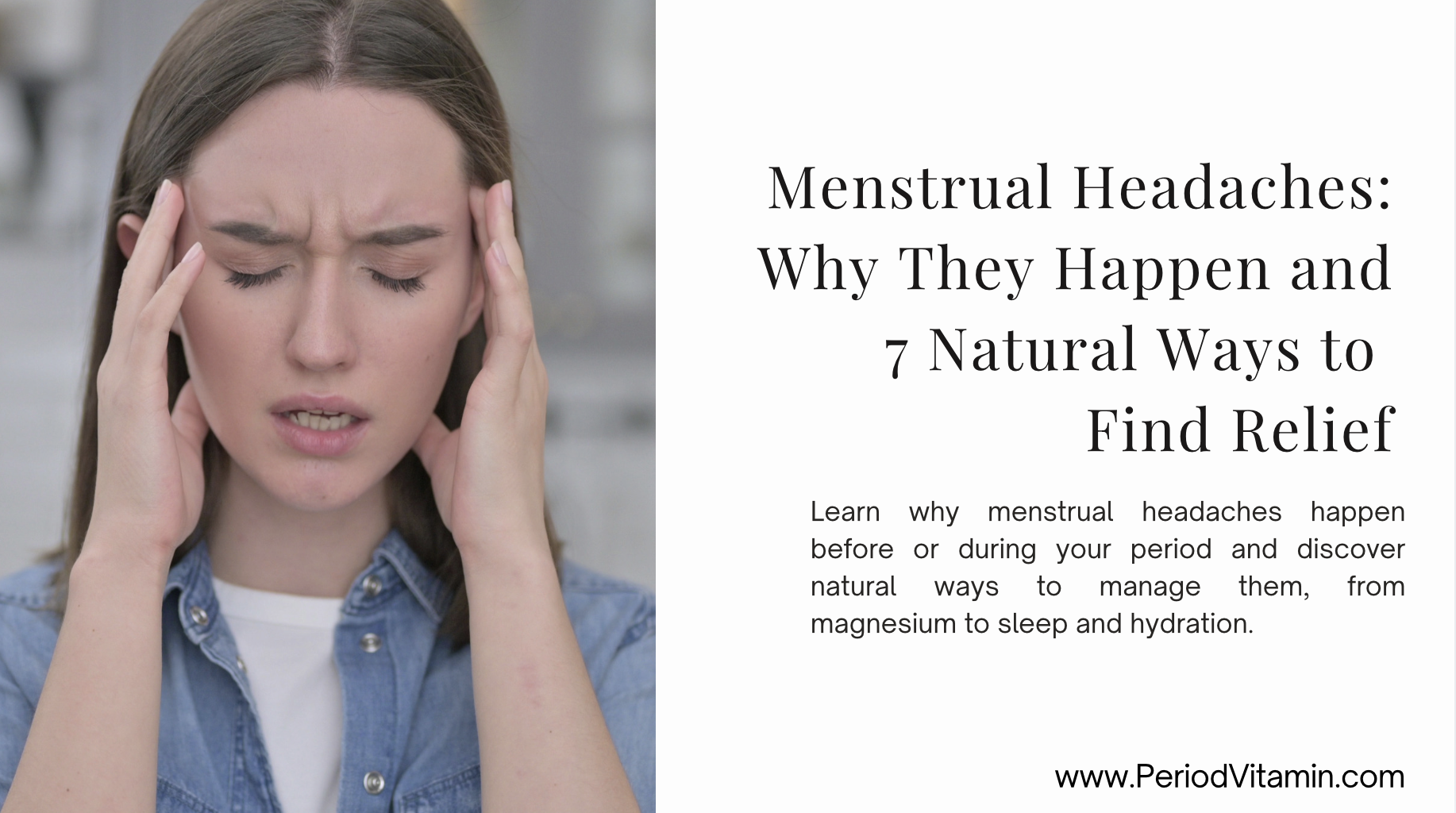
If you tend to get a headache a few days before your period or find yourself reaching for the pain reliever shortly after your period begins, the timing may not be a coincidence.
Headaches are a common premenstrual symptom, and for some women, migraine attacks seem to follow the menstrual cycle with frustrating predictability. You may feel perfectly well for most of the month, only to notice the familiar pressure, throbbing, light sensitivity, or nausea as your period approaches.
There is a biological reason this can happen.
Your menstrual cycle is not simply about bleeding once a month. It is a coordinated hormonal cycle involving changes in estrogen and progesterone, along with effects on the nervous system, blood vessels, sleep, appetite, stress response, and pain perception.
Understanding that connection can make menstrual headaches feel a little less mysterious and can help you develop a more useful plan for managing them.
Why Do I Get Headaches Before My Period?
For many women, the important part of the cycle happens in the days leading up to menstruation.
After ovulation, estrogen and progesterone eventually decline if pregnancy has not occurred. The drop in estrogen that occurs around menstruation appears to be particularly important for women who are susceptible to migraine.
The U.S. Office on Women’s Health explains that hormone changes during the menstrual cycle can trigger migraine attacks and that the sharp decline in estrogen and progesterone before menstruation may play a role.
This is why your headache may appear at roughly the same point in your cycle each month.
There is also an important distinction between an ordinary headache that happens around your period and menstrual migraine.
Menstrual migraine tends to occur around the beginning of menstruation and can be more intense and longer lasting than migraine attacks at other times. The NHS describes menstrual migraine as migraine attacks occurring just before or during a period and notes that they are often longer and more severe than migraine attacks occurring at other times.
Learn more about menstrual migraine from the Office on Women’s Health
Hormones, however, may be only one part of the picture.
The days surrounding your period can also bring changes in sleep, appetite, stress, food cravings, hydration, and caffeine intake. If you are already vulnerable to headaches or migraine, several small triggers occurring together may be enough to push you over your personal headache threshold.
This is why menstrual headache support is often more effective when you look at the whole pattern rather than searching for one miracle remedy.
1. Start With Hydration and Regular Meals
This may sound almost too simple, but it is one of the first places worth looking.
Skipping meals and becoming dehydrated can contribute to headaches and may trigger migraine in susceptible people. Around your period, appetite and food preferences can change, which sometimes means eating less regularly than usual.
Try to keep meals relatively consistent, particularly during the few days when you know headaches are most likely to appear.
Rather than waiting until you are ravenously hungry, think in terms of keeping your body adequately fueled. Meals containing protein, carbohydrates, healthy fats, and nutrient rich whole foods can help provide steadier energy throughout the day.
Hydration deserves the same attention. You do not necessarily need to force yourself to drink enormous quantities of water, but regularly drinking fluids throughout the day is a reasonable place to start.
Caffeine can be more complicated. Some people find that caffeine helps a headache, while too much caffeine or suddenly withdrawing from it can trigger migraine. If you drink coffee every day, consistency may matter more than dramatically increasing or eliminating caffeine every time your period begins.
2. Consider Whether Magnesium Belongs in Your Routine
Magnesium receives a great deal of attention in conversations about PMS and migraine, and unlike many trendy supplement recommendations, there is at least some clinical research behind the interest.
Magnesium is involved in hundreds of processes throughout the body, including normal nerve and muscle function. Some studies have found that magnesium supplementation may modestly reduce migraine frequency in certain people.
The National Institutes of Health Office of Dietary Supplements notes that several small studies have found magnesium supplements may modestly reduce migraine frequency, although more research is needed. Importantly, the doses used for migraine prevention can exceed the recommended upper limit for supplemental magnesium, so using high dose magnesium specifically for migraine should be discussed with a healthcare professional.
You can also think about magnesium from a food first perspective. Foods that naturally provide magnesium include nuts, seeds, legumes, whole grains, and leafy green vegetables.
Read the NIH Magnesium Fact Sheet
The goal is not to assume that every menstrual headache means you are deficient in magnesium. It is simply one nutrient worth understanding as part of the larger picture.
3. Use Heat for Neck and Shoulder Tension
The old recommendation to place something warm around your neck was not entirely unreasonable, although there is no need for the elaborate boiling water method found in older home remedy advice.
Some headaches are accompanied by tightness through the neck, shoulders, jaw, and upper back. Gentle warmth can feel soothing when muscle tension is part of what you are experiencing.
A warm shower, warm bath, or safely used heating pad may help relax tense muscles.
Heat should feel comfortably warm rather than intensely hot. Avoid falling asleep on a heating pad, and always follow the manufacturer’s safety instructions.
It is also important to recognize the limitation here. Relaxing tense neck muscles may make you more comfortable, but menstrual migraine is not simply caused by tight neck and back muscles. Migraine is a neurological disorder, and the relationship between migraine and reproductive hormones is much more complex.
4. Try Gentle Movement or Yoga
When a headache is beginning, an intense workout may be the last thing you want. Gentle movement, however, may feel surprisingly good for some women.
Yoga, walking, mobility work, and slow stretching can help release tension and may also support stress management.
Instead of relying on one specific pose as a “menstrual headache cure,” experiment with movements that relax your neck, shoulders, spine, and hips.
Cat Cow is a simple example. Begin on your hands and knees and slowly alternate between gently rounding and extending your spine while breathing normally. The goal is not to stretch as aggressively as possible. The movement should feel comfortable and calming.
If movement makes your headache worse, particularly if you are experiencing a true migraine attack, there is no reason to push through it. Resting in a quiet, darkened room may be far more appropriate.
5. Pay Attention to Sleep Before Your Period
Sleep and migraine have a complicated relationship.
Too little sleep can trigger headaches, but major changes in your normal sleep schedule can also be problematic for some people. This is one reason a consistent bedtime and waking time may be particularly helpful if your headaches tend to follow a predictable menstrual pattern.
The Office on Women’s Health lists too little or too much sleep, skipped meals, stress, caffeine changes, and menstrual hormone changes among potential migraine triggers.
Rather than treating sleep as something to fix only after the headache appears, consider the several days before your expected period as your preparation window.
If you already know that headaches tend to arrive on day 27 or the first day of your period, those preceding days are a good time to protect your sleep routine, eat regularly, stay hydrated, and reduce unnecessary triggers.
6. Use Aromatherapy as a Comfort Tool, Not a Cure
Some women find that certain scents, particularly lavender or peppermint, help them feel calmer and more comfortable when a headache appears. Aromatherapy will not address the hormonal changes that may contribute to menstrual headaches, but it can be a soothing part of your self care routine.
Lavender is often associated with relaxation, which may be especially appealing if your headache arrives alongside stress, poor sleep, or tension through your neck and shoulders. Peppermint is another popular choice because its cooling sensation can feel refreshing when applied appropriately.
If you use essential oils on your skin, they should generally be diluted in a suitable carrier oil rather than applied heavily or undiluted. You can also enjoy them through a diffuser or simply use the scent as part of a quiet, relaxing environment.
It is worth remembering that migraine can make some people unusually sensitive to smells. A fragrance that feels calming one day may feel overwhelming during a migraine attack. If scents worsen your nausea or headache, skip them and choose a dark, quiet, comfortable space instead.
The goal with aromatherapy is not to “balance your hormones” or stop a menstrual migraine at its source. Think of it as a gentle comfort measure that may help you relax while you pay attention to the bigger pieces of menstrual headache care, including sleep, hydration, regular meals, stress, and your individual cycle pattern.
7. Track Your Headache Alongside Your Menstrual Cycle
This may be one of the most useful things you can do if headaches repeatedly appear around your period.
Instead of simply recording, “I had a headache today,” track the details.
Notice when your period begins, when the headache begins, how long it lasts, where you feel the pain, whether it throbs, whether you experience nausea or sensitivity to light, how you slept, whether you skipped meals, and what seemed to help.
You do not have to obsess over every detail. You are looking for patterns.
The Office on Women’s Health specifically recommends tracking both migraine attacks and menstrual periods because this can help you and your healthcare professional determine whether the headaches consistently occur at a similar point in your cycle.
Read more about migraine and women’s health
After two or three cycles, you may begin to see something you could not see when looking at each headache individually.
Perhaps your headaches consistently begin the day before bleeding. Maybe they happen after a night of poor sleep. Perhaps skipping breakfast seems to make them worse.
That information can be far more useful than randomly trying a different remedy every month.
What If Natural Strategies Are Not Enough?
There is an important difference between supporting your body and feeling that you should be able to manage every menstrual symptom naturally.
You do not get extra points for suffering through a migraine without medication.
Migraine treatment may include over the counter pain relievers as well as prescription treatments or other migraine medications. For women whose migraine attacks occur predictably around menstruation, a healthcare professional may recommend a treatment or prevention strategy specifically designed around that menstrual window.
If headaches are frequent, severe, changing, or interfering with work, sleep, exercise, parenting, or everyday life, it is worth discussing them with a healthcare professional.
Can Nutritional Support Help With PMS Headaches?
Nutrition is part of menstrual health, but it is important to keep expectations realistic.
There is no vitamin that can guarantee that you will never experience another menstrual headache. At the same time, nutrients such as magnesium and certain B vitamins play important roles in normal nervous system function and overall health.
A nutrient rich diet should provide the foundation. Some women also choose a menstrual wellness supplement as a convenient addition to their routine, particularly if they are looking for broader nutritional support throughout the month.
Period Vitamin was created with this broader menstrual wellness approach in mind, combining selected vitamins, minerals, and herbal ingredients in one formula.
Rather than thinking of a supplement as something you take when a headache has already arrived, it makes more sense to view nutritional support as one part of your overall menstrual wellness routine alongside balanced meals, sleep, movement, hydration, stress management, and understanding your own cycle.
Supplements should complement those foundations rather than replace them.
When Should You Talk to a Doctor About Menstrual Headaches?
A headache that reliably appears around your period may be related to hormonal changes, but recurring headaches should not automatically be dismissed as “just hormones.”
Talk with your healthcare professional if your headaches are becoming more frequent or severe, regularly interfere with daily life, last longer than usual, or are no longer responding to strategies that previously helped.
Seek urgent medical attention for a sudden extremely painful headache or a headache accompanied by concerning neurological symptoms such as weakness, confusion, seizures, difficulty speaking, or significant vision changes.
If you experience migraine with aura and use estrogen containing hormonal contraception, make sure your healthcare professional knows about your migraine history. The Office on Women’s Health specifically advises women using hormonal birth control who experience migraine with aura to discuss this with their doctor.
The Bottom Line
When headaches show up at the same time every month, your body may be giving you useful information about how sensitive your nervous system is to the hormonal transition surrounding menstruation.
You cannot control every hormonal fluctuation, and you should not feel as though you have failed if hydration, yoga, magnesium, or a good night’s sleep does not make a migraine disappear.
What you can do is learn your pattern.
Track when headaches happen. Protect your sleep. Eat regularly. Stay adequately hydrated. Pay attention to caffeine and other personal triggers. Make sure your overall diet provides the nutrients your body needs, and seek medical treatment when headaches are severe or persistent.
Menstrual wellness is rarely about finding one perfect remedy. It is about understanding your own cycle well enough to recognize what your body needs and knowing when a symptom deserves more attention.