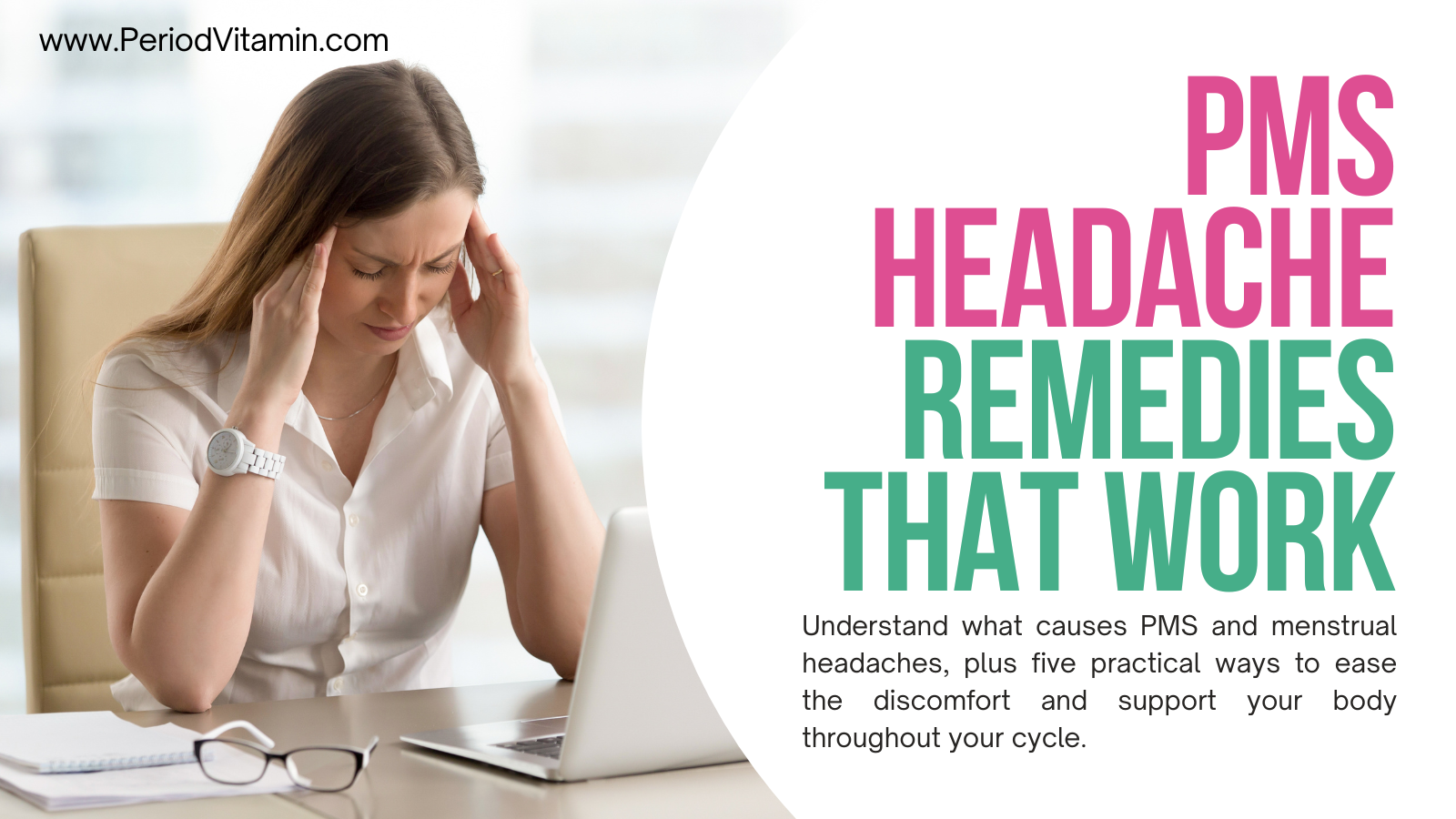
A headache before or during your period can make it difficult to work, exercise, concentrate, or enjoy your plans. Although menstrual headaches are common, you do not have to simply accept the pain every month.
Understanding what may be triggering your headache can help you choose a safer and more effective way to manage it.
Are Headaches a Symptom of PMS?
Yes. Headaches can occur as part of premenstrual syndrome. The American College of Obstetricians and Gynecologists includes headache among the possible physical symptoms of PMS.
However, not every headache that happens around your period is necessarily caused by your menstrual cycle. Dehydration, missed meals, caffeine changes, stress, inadequate sleep, muscle tension, illness, medication overuse, and migraine disorders can also contribute.
Tracking your headaches for two or three cycles can help you determine whether there is a consistent menstrual pattern.
Record:
- When the headache begins
- How long it lasts
- Where you feel the pain
- Whether the pain throbs or feels like pressure
- Other symptoms, such as nausea or light sensitivity
- What you ate and drank that day
- How much sleep you received
- Any medicine or supplement you used
- When your period started
This information can also help your healthcare provider distinguish a menstrual migraine from another type of headache.
What Causes Headaches Before Your Period?
Hormonal fluctuations are one possible explanation. Estrogen levels change throughout the menstrual cycle and typically fall shortly before menstruation begins. For people who are vulnerable to migraine, this hormonal change may trigger an attack.
Menstrual migraine commonly occurs during the two days before menstruation begins or within the first three days of bleeding. It may cause:
- Throbbing or pulsing pain
- Pain on one or both sides of the head
- Nausea or vomiting
- Sensitivity to light, sound, or smells
- Pain that becomes worse with normal physical activity
Menstrual migraine attacks may be longer or more difficult to treat than migraine attacks that happen at other times of the month.
A headache that feels like tightness or pressure around the forehead, temples, scalp, neck, or shoulders may be a tension type headache. Stress, poor sleep, long periods of screen use, and muscle tension may make this kind of headache more likely.
Five Ways to Manage PMS and Menstrual Headaches
1. Eat Regularly and Stay Hydrated
Skipping meals does not cause every headache, but hunger and changes in blood glucose can trigger headaches in some people. You may be more vulnerable if you are already dealing with hormonal changes, poor sleep, or stress.
Instead of following a rigid carbohydrate limit, focus on balanced meals that contain:
- A source of protein
- Fiber rich carbohydrates
- Vegetables or fruit
- A source of healthy fat
Examples include eggs with whole grain toast and fruit, yogurt with berries and nuts, or chicken with brown rice and vegetables.
Drink water regularly throughout the day. You may need more fluid when exercising, spending time in hot weather, or experiencing vomiting or diarrhea. Limiting excessive alcohol may also help because alcohol can contribute to dehydration and trigger migraine in some people.
2. Protect Your Sleep Routine
Both inadequate sleep and major changes in your sleep schedule can contribute to headaches. Try to go to bed and wake up at approximately the same time each day, including during the days leading up to your period.
A supportive bedtime routine may include:
- Reducing bright screen exposure before bed
- Keeping the bedroom cool and dark
- Avoiding caffeine late in the day
- Allowing time to wind down
- Practicing gentle stretching or slow breathing
Melatonin is not an automatic treatment for menstrual headaches, and a specific dose is not appropriate for everyone. It can cause daytime sleepiness, dizziness, vivid dreams, and interactions with certain medications. Ask your healthcare provider before using it, especially if you are pregnant, breastfeeding, taking medication, or managing a medical condition.
3. Reduce Stress and Muscle Tension
Stress may make an existing headache or migraine attack feel worse. It can also interfere with sleep, encourage jaw clenching, and increase tension in the neck and shoulders.
Simple strategies that may help include:
- Slow breathing exercises
- Gentle yoga or stretching
- A short walk
- Meditation
- Massage
- A warm shower
- A warm or cold pack on the head, neck, or shoulders
- Resting in a quiet, dark room
Adaptogenic herbs such as ashwagandha or ginseng should not be presented as quick headache treatments. Evidence is limited, products vary considerably, and these herbs can interact with medications or be inappropriate for certain medical conditions.
If you want to try an herbal supplement, discuss it with a qualified healthcare professional instead of automatically taking a standard number of capsules.
4. Discuss Magnesium and Other Nutrients With Your Provider
Magnesium plays a role in normal nerve and muscle function. Some evidence suggests that magnesium supplementation may help prevent certain migraine attacks, including menstrual migraine. The American Migraine Foundation recommends discussing magnesium with a healthcare professional as part of a migraine prevention plan.
Magnesium is also available naturally in foods such as:
- Almonds and cashews
- Pumpkin seeds
- Beans and lentils
- Spinach and other leafy greens
- Whole grains
- Avocado
Magnesium supplements can cause diarrhea, nausea, and abdominal cramping. They may also interfere with some antibiotics, osteoporosis medications, and other medicines. People with kidney disease should seek medical guidance before taking supplemental magnesium.
Vitamin B6 supports normal nervous system function and is sometimes included in menstrual wellness supplements. However, evidence that vitamin B6 specifically prevents menstrual headaches is limited. Large supplemental amounts can cause nerve damage, particularly when several products containing vitamin B6 are combined.
Check the Supplement Facts labels of all products you take and avoid assuming that more is better.
Iron should not be used as a general headache remedy unless a healthcare professional determines that you need it. People with heavy menstrual bleeding may be at greater risk of iron deficiency, which can cause fatigue, weakness, dizziness, shortness of breath, and headaches. A blood test can help determine whether iron supplementation is appropriate.
5. Ask About Proven Menstrual Migraine Treatments
If your headaches consistently occur around your period, speak with a healthcare provider. Treatment depends on whether you have migraine, tension type headaches, or another condition.
For occasional headache pain, a healthcare professional may recommend an over the counter pain reliever when it is safe for you. Some people should avoid nonsteroidal anti inflammatory drugs, including those with certain kidney problems, stomach ulcers, bleeding disorders, medication interactions, or allergies.
People with menstrual migraine may benefit from prescription migraine medication. For predictable attacks, a clinician may recommend short term prevention during the days surrounding menstruation. Options can include certain anti inflammatory medicines, triptans, magnesium, or carefully selected hormonal approaches.
The American Migraine Foundation explains that the best treatment depends on your symptoms, cycle pattern, medical history, and current medications.
Hormonal treatment requires individualized guidance. In particular, combined hormonal birth control is generally not appropriate for people who have migraine with aura because it may increase stroke risk.
What About Chasteberry?
Chasteberry, also called Vitex agnus castus, has been studied for general PMS symptoms. However, research does not establish it as a dependable, fast acting treatment for menstrual headaches.
According to the National Center for Complementary and Integrative Health, the available research on chasteberry is limited, and stronger evidence is needed for many of its promoted uses.
Chasteberry may also be unsuitable during pregnancy or breastfeeding and may interact with hormonal medications, birth control, fertility treatments, and medications that affect dopamine. Because extracts have different concentrations, prescribing a universal dose such as 100 milligrams twice daily is not appropriate.
Talk with a healthcare professional before using chasteberry or another herbal product.
Can a Period Vitamin Help?
A well formulated menstrual wellness supplement can provide nutrients involved in normal energy metabolism, muscle function, and nervous system health. It may be a convenient addition for someone whose diet does not consistently provide enough of certain nutrients.
However, a period vitamin is not a medication and should not be promoted as a treatment or guaranteed prevention for headaches or migraine. Supplements work best as one part of a broader wellness routine that includes balanced nutrition, hydration, consistent sleep, exercise, and appropriate medical care.
Before combining supplements, compare their labels carefully. This helps you avoid unintentionally consuming excessive amounts of vitamin B6, magnesium, iron, or other ingredients.
Period Vitamin is formulated to provide nutritional support throughout the menstrual cycle. Individual results vary, and anyone who is pregnant, breastfeeding, managing a health condition, or taking medication should consult a healthcare professional before use.
When Should You Seek Medical Care?
Schedule an appointment if your headaches:
- Occur during most menstrual cycles
- Are becoming more frequent or severe
- Interfere with work, sleep, exercise, or daily life
- Require pain medicine several days each week
- Are accompanied by visual changes, numbness, weakness, or difficulty speaking
- Begin for the first time after age 50
- Feel different from your usual headaches
Seek urgent medical care for a sudden, extremely severe headache or a headache accompanied by fainting, confusion, fever, stiff neck, seizure, weakness, loss of vision, difficulty speaking, chest pain, or a recent head injury.
The Bottom Line
Headaches can be a genuine symptom of PMS, and a fall in estrogen may trigger menstrual migraine in some people. However, headaches around your period can also be influenced by skipped meals, dehydration, stress, inadequate sleep, muscle tension, and other medical conditions.
Start by tracking your symptoms, eating regular balanced meals, staying hydrated, protecting your sleep, and managing tension. If headaches repeatedly disrupt your life, speak with a healthcare provider. Proper diagnosis is often the most important step toward finding relief that works.
This article is for educational purposes only and is not intended to diagnose, treat, cure, or prevent any disease. It does not replace personalized medical advice.