Table of Contents
- Why Does Acne Appear Before Your Period?
- How Hormones Affect Your Skin
- Why Some Women Get PMS Acne More Than Others
- Where Period Acne Usually Appears
- Lifestyle Factors That Can Make Breakouts Worse
- How to Help Prevent Acne Before Your Period
- The Best Skin Care Routine Before Your Period
- Nutrients That Support Healthy Skin
- Common Acne Myths
- When to See a Healthcare Provider
- Frequently Asked Questions
- Final Thoughts
Acne Before Your Period: Why It Happens and How to Help Prevent Monthly Breakouts
Does it seem like a new pimple appears every month just a few days before your period?
Many women notice that their skin is relatively clear for most of the month, then suddenly they wake up with painful pimples on the chin, jawline, cheeks, or forehead just before menstruation begins.
These monthly breakouts are commonly called PMS acne or hormonal acne before your period. They happen because your hormones naturally fluctuate throughout your menstrual cycle.
The good news is that understanding why this happens can help you build habits that support healthier skin throughout the month.
Guidance from organizations such as the American Academy of Dermatology (AAD), the American College of Obstetricians and Gynecologists (ACOG), the Office on Women’s Health, and the National Institutes of Health (NIH) helps explain the role hormones play in menstrual cycle related skin changes and supports many of the healthy lifestyle recommendations discussed in this article.
This article explains what causes acne before your period, why some women experience it more than others, and practical evidence informed strategies that may help reduce monthly breakouts.
Why Does Acne Appear Before Your Period?
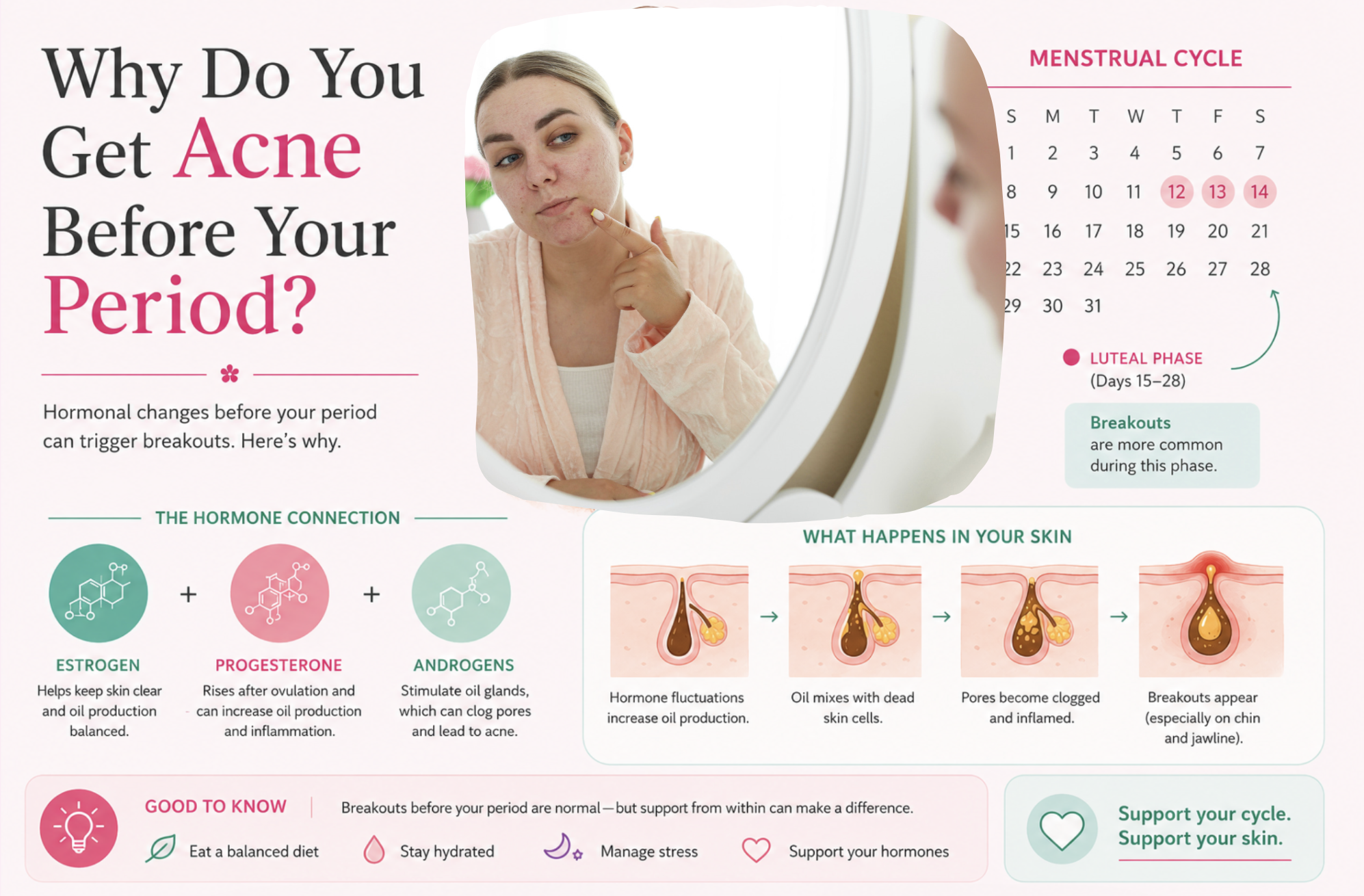
Your skin responds to changes in your hormones throughout the menstrual cycle.
After ovulation, progesterone levels increase while estrogen begins to decline. As your period approaches, both estrogen and progesterone fall rapidly.
During this time, androgens, including testosterone, may have a stronger effect on the skin even if their actual levels do not increase significantly.
This hormonal shift can:
- Increase oil production
- Make pores more likely to become clogged
- Increase inflammation
- Allow acne causing bacteria to thrive more easily
When excess oil mixes with dead skin cells inside pores, pimples can develop.
This explains why many women experience acne during the week before their period.
How Hormones Affect Your Skin
Understanding your hormones helps explain why these breakouts often occur like clockwork.
Estrogen
Estrogen generally supports healthy skin by helping maintain hydration and balancing oil production.
Higher estrogen levels are often associated with smoother, calmer skin.
Progesterone
Progesterone rises after ovulation.
For some women, this hormone can increase oil production and make pores swell slightly, creating an environment where clogged pores become more likely.
Androgens
Androgens stimulate sebaceous glands to produce sebum.
Too much sebum is one of the major contributors to acne.
Even normal androgen levels may trigger breakouts if your skin is particularly sensitive.
Why Some Women Get PMS Acne More Than Others
Not everyone experiences hormonal acne.
Several factors may influence whether monthly breakouts occur.
Genetics
If your mother or sisters experienced hormonal acne, you may be more likely to experience it as well.
However, genetics are only one piece of the puzzle.
Healthy lifestyle habits can still make a meaningful difference in skin health.
Naturally Oily Skin
People with oilier skin tend to produce more sebum, increasing the chance of clogged pores.
Stress
Chronic stress raises cortisol levels.
Higher cortisol may increase oil production and worsen inflammation, making breakouts more noticeable.
Sleep Quality
Poor sleep affects many hormones involved in skin repair and inflammation.
Getting adequate sleep supports your body’s natural healing processes.
Skin Care Habits
Not cleansing your face regularly, sleeping with makeup on, or using products that clog pores can contribute to acne.
Diet
Research continues to explore the relationship between nutrition and acne.
Some evidence suggests that high glycemic foods may worsen acne in certain people, although responses vary from person to person.
Where Period Acne Usually Appears
Hormonal acne often develops in characteristic areas.
These include:
- Chin
- Jawline
- Around the mouth
- Lower cheeks
- Neck
Some women also experience acne on the:
- Chest
- Shoulders
- Upper back
- Scalp
The location varies depending on skin type and individual hormone sensitivity.
Lifestyle Factors That Can Make Breakouts Worse
Hormones are not the only reason acne develops.
Several everyday habits may influence skin health.
Highly Processed Foods
A diet rich in highly processed foods and added sugars may contribute to inflammation in some individuals.
Choosing a balanced eating pattern with plenty of whole foods supports overall health.
Lack of Sleep
Aim for seven to nine hours of sleep each night whenever possible.
Quality sleep supports hormone balance, immune function, and skin repair.
Chronic Stress
Stress management practices such as walking, meditation, deep breathing, or yoga may support overall wellbeing.
Smoking
Smoking has been linked with poorer skin health and slower healing.
Touching Your Face
Frequent touching transfers oil and bacteria to the skin.
How to Help Prevent Acne Before Your Period
Although there is no guaranteed way to eliminate hormonal acne completely, many women find that consistent habits help reduce the severity of monthly breakouts.
1. Follow a Consistent Skin Care Routine
The American Academy of Dermatology recommends gentle skin care for acne prone skin, including washing with a mild cleanser, avoiding harsh scrubbing, using non comedogenic products, and resisting the urge to squeeze pimples because doing so can increase inflammation and the risk of scarring.
Simple routines are often the most effective.
Consider:
- Washing your face twice daily with a gentle cleanser
- Removing makeup before bed
- Moisturizing with non comedogenic products
- Using sunscreen every day
Avoid harsh scrubbing, which may irritate the skin.
2. Exfoliate Gently
Dead skin cells can contribute to clogged pores.
Gentle exfoliation once or twice weekly may help keep pores clearer.
Avoid over exfoliating because excessive irritation can worsen acne.
3. Stay Physically Active
Regular exercise supports circulation, stress management, and overall health.
Sweating itself does not “remove toxins” from the body, but exercise may indirectly support healthier skin by improving circulation and reducing stress.
After exercising, shower promptly to remove sweat, oil, and bacteria from the skin.
4. Get Enough Sleep
Sleep is one of the most overlooked aspects of skin health.
During sleep your body repairs tissues and regulates hormones involved in inflammation.
Aim for consistent sleep rather than trying to catch up on weekends.
5. Eat a Nutrient Rich Diet
Focus on foods such as:
- Colorful vegetables
- Fruits
- Lean proteins
- Whole grains
- Healthy fats
- Nuts
- Seeds
- Fatty fish
These foods provide vitamins and minerals that support overall skin health.
6. Stay Hydrated
Proper hydration supports normal skin function.
Water alone will not prevent acne, but staying hydrated supports overall health.
7. Manage Stress
Even a few minutes each day can help.
Try:
- Meditation
- Stretching
- Journaling
- Gentle yoga
- Walking outdoors
Nutrients That Support Healthy Skin
Nutrition is only one piece of acne management, but getting enough essential nutrients supports healthy skin.
| Nutrient | Role in Skin Health | Food Sources |
|---|---|---|
| Vitamin A | Supports normal skin cell turnover | Sweet potatoes, carrots, spinach |
| Vitamin C | Supports collagen production and antioxidant protection | Citrus fruits, berries, bell peppers |
| Vitamin D | Supports immune function and overall health | Fatty fish, fortified dairy, sunlight exposure |
| Vitamin E | Protects cells from oxidative stress | Almonds, sunflower seeds |
| Zinc | Supports skin repair and immune function | Beef, pumpkin seeds, beans |
| Omega 3 fats | Support a healthy inflammatory response | Salmon, sardines, walnuts |
Women who struggle to meet their nutritional needs through diet alone sometimes choose a menstrual wellness supplement formulated with vitamins and minerals that support overall health throughout the menstrual cycle.
A supplement should complement, not replace, a balanced diet.
What About Herbal Remedies?
Some herbs have traditionally been used to support skin health.
For example, neem has antimicrobial properties in laboratory studies.
However, high quality human research showing that neem supplements reliably prevent hormonal acne is limited.
Before taking herbal supplements, especially if you are pregnant, breastfeeding, or taking medications, speak with a qualified healthcare professional.
Should You Do a Detox or Colon Cleanse?
You may come across claims that acne is caused by “toxins” inside the body.
Current scientific evidence does not support colon cleanses or colon hydrotherapy as treatments for acne.
Your liver and kidneys naturally remove waste products from your body.
Instead of detox products, focus on:
- Eating fiber rich foods
- Staying hydrated
- Exercising regularly
- Sleeping well
- Following a consistent skincare routine
These habits are supported by much stronger evidence.
Common Acne Myths
Myth 1: Dirty skin causes acne.
Not exactly. Acne develops inside pores because of hormones, oil, bacteria, and inflammation. Over washing may actually irritate the skin.
Myth 2: Chocolate always causes acne.
Research is mixed. Some people notice certain foods trigger breakouts, while others do not. Keeping a symptom journal may help identify personal patterns.
Myth 3: Popping pimples helps them heal.
Actually, squeezing pimples often increases inflammation and raises the risk of scarring.
Myth 4: Acne only affects teenagers.
Hormonal acne is extremely common in adult women. Many women continue experiencing monthly breakouts into their thirties, forties, and beyond.
When Should You See a Healthcare Provider?
Both the American Academy of Dermatology and the American College of Obstetricians and Gynecologists recommend seeking medical evaluation if acne becomes severe, causes scarring, does not improve with over the counter treatments, or occurs alongside irregular periods or other signs of hormonal imbalance.
Consider seeking medical advice if:
- Acne is painful or cystic
- Acne leaves scars
- Over the counter treatments are not helping
- Breakouts suddenly become much worse
- Your periods are irregular along with acne
- You have increased facial hair or other signs of hormonal imbalance
A healthcare provider can determine whether another medical condition, such as polycystic ovary syndrome, may be contributing.
Frequently Asked Questions
Why do I always get acne before my period?
Hormonal changes before menstruation increase oil production and inflammation, making pores more likely to become clogged.
How many days before my period does acne usually appear?
Many women notice breakouts about seven to ten days before menstruation, although timing varies.
Will acne disappear after my period starts?
For many women, pimples begin improving once hormone levels stabilize after menstruation begins.
Can vitamins prevent hormonal acne?
Getting enough vitamins and minerals supports healthy skin, but no vitamin can guarantee acne prevention. Nutrition works best alongside healthy skincare and lifestyle habits.
Is hormonal acne normal?
Yes. Hormonal acne is very common among women of reproductive age.
Does stress make period acne worse?
Stress may contribute by increasing cortisol, which can affect oil production and inflammation.
Key Takeaways
Acne before your period is a common result of normal hormonal changes that occur during the menstrual cycle.
While you cannot completely control hormone fluctuations, you can support healthier skin by maintaining a consistent skincare routine, eating a nutrient rich diet, getting enough sleep, staying physically active, and managing stress.
Small daily habits often have a greater long term impact than searching for a quick fix.
If your acne is severe, painful, or affecting your quality of life, consult a healthcare provider for individualized treatment options.
Every menstrual cycle is unique, and so is your skin. Supporting your body with balanced nutrition, healthy lifestyle habits, and a consistent skincare routine may help you feel your best throughout the month. Explore more evidence based menstrual wellness articles at PeriodVitamin.com and learn practical ways to support your health during every phase of your cycle.
Read more: