7 Signs Your Period May Be Coming Soon
Have you ever looked at your calendar and thought, I think my period is about to start, even before checking the date?
Many women become surprisingly good at recognizing the subtle changes their bodies make during the days leading up to menstruation. Maybe your favorite jeans suddenly feel tighter. Perhaps you feel more emotional than usual or notice a breakout appearing on your chin. These changes are not random. They are often your body’s natural response to shifting hormone levels during the second half of your menstrual cycle.
Learning to recognize these early signs can help you feel more prepared each month. Instead of wondering why you suddenly feel different, you can understand what your body is communicating and take simple steps to support your health.
Every woman experiences the menstrual cycle differently. Some notice only one or two symptoms while others experience several at once. The intensity may even change from month to month.
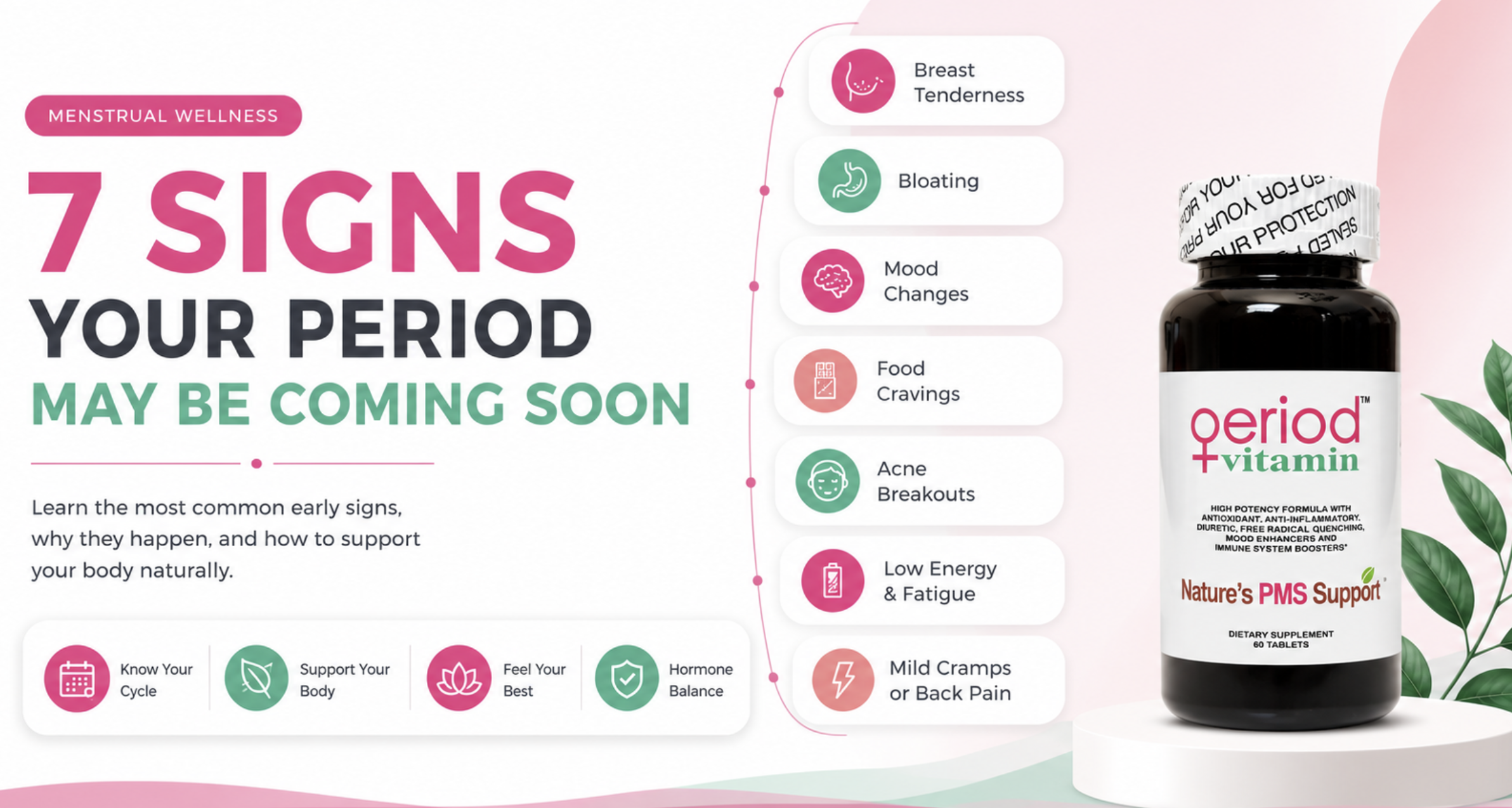
In this guide, we’ll explore seven common signs your period may be coming soon, explain why they happen, and share practical ways to support your body throughout this phase of your cycle.
Why Your Body Changes Before Your Period
To understand why these symptoms appear, it helps to understand what happens hormonally.
After ovulation, your body produces higher levels of progesterone while estrogen also fluctuates. If pregnancy does not occur, both hormones begin to decline during the days before your period starts.
These hormonal changes influence much more than your reproductive system. They can affect your brain, digestive system, skin, breasts, muscles, energy levels, and even sleep quality.
That is why the days before menstruation often feel very different from the week immediately after your period ends.
According to the American College of Obstetricians and Gynecologists, premenstrual symptoms are common and may include physical, emotional, and behavioral changes that occur during the days before menstruation.
1. Breast Tenderness
One of the earliest signs that your period may be approaching is breast tenderness.
Your breasts may feel swollen, heavy, or unusually sensitive to touch. Even wearing a bra or sleeping on your stomach may feel uncomfortable.
This happens because progesterone and estrogen influence the breast tissue during the second half of your cycle. Temporary fluid retention can also increase fullness and sensitivity.
For many women, breast tenderness begins several days before menstruation and gradually improves once bleeding starts.
If breast soreness is something you experience regularly, you may enjoy reading our guide on Why Do Your Breasts Feel Sore Before Your Period?, where we explain why cyclical breast pain happens and simple ways to feel more comfortable.
Supporting overall nutrition, staying active, limiting excess sodium, and getting enough sleep may also help support breast comfort throughout the month.
2. Bloating
Does your stomach suddenly feel fuller even though your eating habits have not changed?
Many women notice bloating during the week before their period.
Hormonal changes can affect the way your body manages fluids. They may also slow digestion slightly, making you feel puffier than usual.
Bloating can affect your abdomen, face, hands, and even your feet. Some women temporarily gain a few pounds due to fluid retention, which usually disappears after menstruation begins.
Simple habits may help reduce discomfort, including drinking enough water, eating potassium rich foods, staying physically active, and limiting highly processed foods that contain large amounts of sodium.
If bloating is one of your most noticeable symptoms, you may also enjoy our article on Bloating Before Your Period, which explains why it happens and practical ways to feel more comfortable naturally.
3. Mood Changes
Have you ever found yourself crying over a commercial or feeling unusually irritated for no obvious reason?
Mood changes are one of the most recognized signs that a period is approaching.
Fluctuating hormone levels may influence neurotransmitters such as serotonin, which plays an important role in mood regulation.
You might notice that you become more emotional, more sensitive, less patient, or simply feel unlike yourself.
These feelings are real and very common.
Many women also report increased anxiety, reduced motivation, or difficulty concentrating during the late luteal phase.
Taking care of your sleep, managing stress, eating balanced meals, and engaging in regular movement may all support emotional wellbeing throughout your cycle.
If emotional symptoms are something you frequently experience, you may also find our article Why Do You Feel So Emotional Before Your Period? helpful, where we explore the science behind these mood changes in greater detail.
4. Food Cravings
Suddenly craving chocolate?
Wanting salty chips?
Feeling hungrier than usual?
You are certainly not alone.
Food cravings often increase during the days leading up to menstruation.
Researchers believe hormonal fluctuations, along with changes in serotonin and blood sugar regulation, may contribute to these cravings. Many women naturally eat a little more during the late luteal phase.
Rather than feeling guilty, try focusing on balanced meals that include protein, healthy fats, fiber, fruits, vegetables, and whole grains.
Allowing yourself to enjoy occasional treats while maintaining an overall nutritious eating pattern is often more sustainable than trying to completely eliminate cravings.
Certain nutrients including magnesium, vitamin B6, iron, and vitamin D play important roles in overall menstrual health. While food should always come first, some women also choose a comprehensive nutritional supplement such as Period Vitamin to help support healthy nutrient intake throughout the menstrual cycle.
5. Acne Breakouts
If you notice a few pimples appearing around your chin, jawline, or lower cheeks every month, your period may be just around the corner.
Hormonal fluctuations before menstruation can increase oil production in the skin. Extra oil can combine with dead skin cells and clog pores, making breakouts more likely.
This type of acne often follows a predictable pattern. It tends to appear during the week before your period and gradually improves after menstruation begins.
Keeping a gentle skincare routine can help support healthy skin. Wash your face twice a day with a mild cleanser, avoid picking at blemishes, and use noncomedogenic skincare products when possible.
Lifestyle habits matter too. Getting enough sleep, managing stress, exercising regularly, and eating a balanced diet all support overall skin health.
If hormonal breakouts happen every month, you may also enjoy reading our article Acne Before Your Period: Why It Happens and How to Prevent It Naturally, where we explain the hormonal connection and everyday habits that may help reduce monthly breakouts.
6. Low Energy and Fatigue
Many women notice they simply do not have the same energy during the days before their period.
You may feel like sleeping longer, skipping your workout, or having less motivation than usual.
This happens because hormone levels begin to decline before menstruation. Your body is also preparing to shed the uterine lining, which requires energy.
For some women, fatigue is mild. Others feel noticeably more tired for several days.
Instead of fighting against your body, it can help to work with it.
Prioritize quality sleep, drink enough water, eat balanced meals, and choose movement that matches your energy level. Some days that may be strength training, while other days it may simply be a relaxing walk or gentle yoga.
If your fatigue continues throughout your cycle or becomes severe enough to interfere with daily life, it is worth discussing with your healthcare provider. Low iron, thyroid conditions, sleep disorders, and other medical conditions can also contribute to ongoing fatigue.
If you experience heavy periods, you may also find our article 5 Signs Your Body May Need More Iron During Your Period helpful, as iron deficiency can contribute to tiredness over time.
7. Mild Cramping or Lower Back Pain
Many women begin feeling mild cramping before bleeding actually starts.
These cramps are usually lighter than menstrual cramps and may feel like a dull ache in the lower abdomen or lower back.
As your body prepares for menstruation, chemicals called prostaglandins begin increasing. These substances help the uterus contract to shed its lining.
For some women, this process begins a day or two before their period officially starts.
Gentle stretching, light exercise, staying hydrated, and using a heating pad may help improve comfort.
Some women also find that relaxation techniques such as meditation or deep breathing help reduce muscle tension and promote overall wellbeing during this phase of the cycle.
When Your Symptoms May Not Be Normal
Most premenstrual symptoms are a normal part of the menstrual cycle. However, symptoms that are severe, sudden, or interfere with daily life deserve medical attention.
Consider speaking with your healthcare provider if you experience:
- Extremely heavy bleeding that soaks through pads or tampons every hour
- Severe pelvic pain that prevents normal activities
- Symptoms that continue throughout the month instead of only before your period
- Depression, anxiety, or mood changes that become overwhelming
- Menstrual cycles that suddenly become very irregular
- Bleeding between periods
While occasional discomfort is common, you should never feel that you simply have to suffer through severe symptoms without seeking medical advice.
Supporting Your Body Before Your Period
Although you cannot completely stop hormonal changes, you can support your body through healthy daily habits.
A nutrient rich diet remains one of the best foundations for menstrual wellness. Eating plenty of vegetables, fruits, whole grains, lean proteins, healthy fats, nuts, seeds, and iron rich foods helps provide the vitamins and minerals your body needs throughout the month.
Regular physical activity may also support circulation, energy, mood, and overall wellbeing. Even moderate exercise such as walking, cycling, yoga, or strength training can make a positive difference for many women.
Sleep is another important piece of the puzzle. Aim for consistent, restorative sleep whenever possible, especially during the week before your period when your body may naturally need more rest.
Managing stress can also help you feel your best. Meditation, deep breathing, journaling, spending time outdoors, or simply slowing down for a few minutes each day may support emotional wellbeing throughout your cycle.
Some women also choose a comprehensive supplement to help fill nutritional gaps alongside a healthy diet. Period Vitamin was created to provide key vitamins and minerals that support overall menstrual wellness throughout every phase of the cycle. Supplements should complement healthy eating rather than replace it.
Every Cycle Is Different
One important thing to remember is that your symptoms may change over time.
You might notice breast tenderness one month and more bloating the next. Stress, sleep quality, nutrition, exercise habits, illness, and natural hormonal variation can all influence how you feel before your period.
That is why tracking your menstrual cycle can be so valuable.
Keeping a simple journal or using a period tracking app can help you recognize patterns. Over several months, you may begin noticing that many symptoms occur around the same time each cycle.
Understanding your body’s natural rhythm allows you to prepare rather than be surprised each month.
Final Thoughts
Your body often gives you small clues before your period arrives.
Breast tenderness, bloating, mood changes, food cravings, acne, fatigue, and mild cramping are among the most common signs that menstruation may be approaching.
These symptoms are usually caused by normal hormonal fluctuations that occur during the menstrual cycle. While they can sometimes feel frustrating, they also provide valuable information about what your body is doing.
Learning to recognize these changes allows you to care for yourself with greater confidence. Nourishing your body, staying active, managing stress, getting enough sleep, and maintaining good nutrition can all support your overall menstrual wellness.
If your symptoms become unusually severe or suddenly change, do not hesitate to speak with a qualified healthcare professional. Every woman deserves answers and appropriate care.
Most women notice symptoms between three and seven days before their period, although some experience changes up to two weeks before menstruation.
Yes. Hormone levels naturally fluctuate from cycle to cycle. Stress, sleep, exercise, illness, nutrition, and age can all influence your symptoms.
Yes. Hormonal changes before menstruation can affect brain chemicals involved in mood regulation, making emotional changes common for many women.
Absolutely. Some women experience only one symptom while others notice several. Every menstrual cycle is unique.
Seek medical advice if symptoms become severe, interfere with daily life, involve extremely heavy bleeding, severe pelvic pain, bleeding between periods, or significant mood changes.
Your menstrual cycle is not something that simply happens once a month. It is an ongoing rhythm that influences your body every day.
The more you understand the signs your period may be coming soon, the better prepared you can be to support your health, reduce surprises, and feel more connected to your body.
Listening to these signals is one of the simplest ways to build a healthier relationship with your menstrual cycle.