What is the difference between PMS and period symptoms?
PMS (Premenstrual Syndrome) symptoms occur before your period begins, usually during the week before menstruation. Period symptoms occur after menstrual bleeding starts. PMS often affects mood, energy, appetite, and breast tenderness, while period symptoms commonly include cramping, menstrual bleeding, fatigue, and lower back pain.
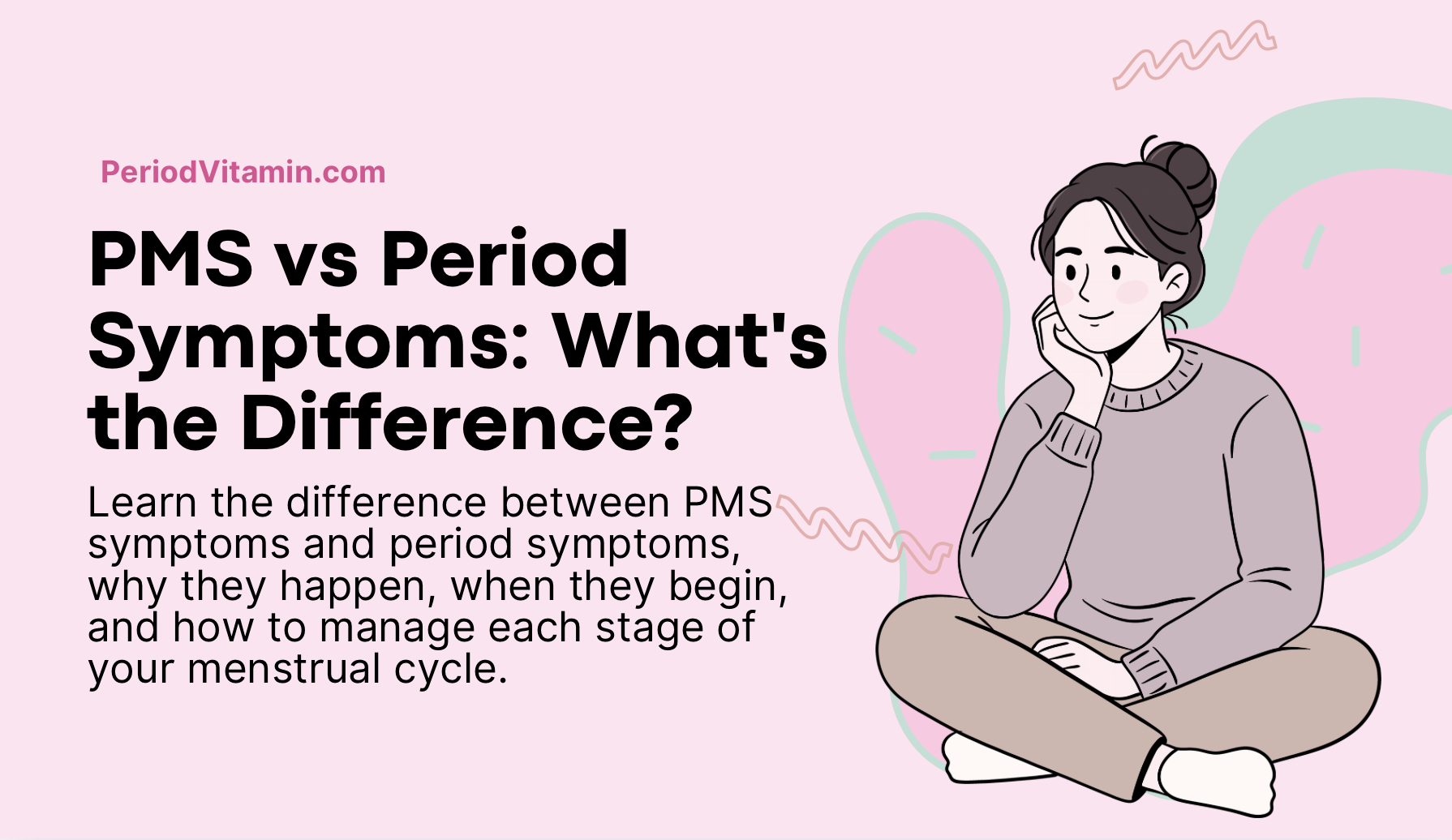
PMS vs Period Symptoms: What’s the Difference?
Many women use the terms PMS and period symptoms interchangeably, but they are not actually the same thing.
Although they happen close together during the menstrual cycle, PMS symptoms occur before your period starts, while period symptoms develop during menstruation.
Understanding the difference can help you better recognize what your body is experiencing each month. It may also help you identify patterns, discuss symptoms more effectively with your healthcare provider, and make informed choices about nutrition and self care.
In this guide, we’ll explain exactly how PMS differs from period symptoms, why both occur, and what you can do to support your body throughout your cycle.
Understanding the Menstrual Cycle
Before comparing symptoms, it helps to understand where each stage fits within the menstrual cycle.
A typical menstrual cycle lasts about 21 to 35 days, although every woman is different.
The cycle has four main phases:
- Menstrual phase
- Follicular phase
- Ovulation
- Luteal phase
PMS develops during the luteal phase, after ovulation but before menstrual bleeding begins.
Period symptoms begin once menstruation starts.
The Office on Women’s Health, part of the U.S. Department of Health and Human Services, explains that hormone levels naturally rise and fall throughout the menstrual cycle. These hormonal shifts prepare the body for a possible pregnancy and are responsible for many of the physical and emotional changes women notice each month.
Menstrual Cycle Timeline
| Cycle Phase | What Happens | Common Symptoms |
|---|---|---|
| Menstrual Phase | Uterine lining sheds | Bleeding, cramps, fatigue |
| Follicular Phase | Estrogen rises | Increased energy, improving mood |
| Ovulation | Egg released | Mild pelvic pain, increased cervical mucus |
| Luteal Phase | Progesterone rises then falls | PMS symptoms |
What Is PMS?
Premenstrual Syndrome (PMS) is a collection of physical, emotional, and behavioral symptoms that appear after ovulation and before menstruation.
Symptoms usually begin 5 to 10 days before your period and improve once menstrual bleeding starts.
Researchers believe PMS is primarily related to normal hormonal fluctuations during the menstrual cycle rather than abnormal hormone levels.
Common PMS Symptoms
Every woman experiences PMS differently.
Common symptoms include:
- Mood swings
Emotional symptoms can sometimes be just as challenging as physical ones. Learn more in Why Do You Feel So Emotional Before Your Period?, where we explore the connection between hormones, brain chemistry, and mood changes throughout the menstrual cycle. - Irritability
- Anxiety
- Feeling emotional
- Breast tenderness
Breast tenderness is another common symptom during the days leading up to menstruation. If you’d like to understand why this happens, read Why Your Breasts Feel Sore Before Your Period, which explains the hormonal changes behind cyclical breast discomfort. - Bloating
- Food cravings
- Increased appetite
- Acne breakouts
- Trouble sleeping
- Fatigue
- Headaches
- Difficulty concentrating
Some women experience only one or two symptoms, while others notice several at the same time.
What Are Period Symptoms?
Period symptoms begin after menstrual bleeding starts.
These symptoms occur because the uterus contracts to shed its lining and because hormone levels are at their lowest point in the menstrual cycle.
Unlike PMS, period symptoms are usually more physical than emotional.
Common Period Symptoms
Many women experience:
- Menstrual cramps
- Lower abdominal pain
- Lower back pain
- Pelvic pressure
- Bleeding
- Fatigue
- Diarrhea
- Nausea
- Headaches
- Muscle aches
- Low energy
Some women continue experiencing mild bloating or mood changes during menstruation, but these often improve compared with the days immediately before their period.
PMS vs Period Symptoms
| PMS | Period Symptoms |
|---|---|
| Occurs before bleeding | Occurs after bleeding starts |
| Begins after ovulation | Begins with menstruation |
| Mood changes are common | Cramping is more common |
| Bloating often peaks | Bleeding begins |
| Breast tenderness common | Breast tenderness often improves |
| Food cravings common | Appetite usually returns to normal |
| Acne may worsen | Acne often begins improving |
| Symptoms usually stop when bleeding starts | Symptoms improve as menstruation ends |
Why Do They Feel So Similar?
Because PMS transitions directly into menstruation, many symptoms overlap.
For example:
- Fatigue may occur before and during your period.
- Headaches can happen in both stages.
- Bloating sometimes continues after bleeding starts.
- Mood changes may linger during the first day or two of menstruation.
This overlap makes it easy to confuse PMS with period symptoms.
Why Hormones Matter
Hormones drive nearly every change during the menstrual cycle.
During the luteal phase:
- Progesterone increases.
- Estrogen changes.
- Neurotransmitters like serotonin may be affected.
These changes may contribute to mood symptoms, food cravings, breast tenderness, and bloating.
Once menstruation begins:
- Estrogen and progesterone reach their lowest levels.
- The uterus releases prostaglandins.
- Prostaglandins trigger uterine contractions that help shed the uterine lining.
These contractions are responsible for menstrual cramps.
Research supported by the National Institutes of Health (NIH) suggests that although hormone levels in women with PMS are generally within normal ranges, some women appear to be more sensitive to the natural hormonal changes that occur during the menstrual cycle. This sensitivity may contribute to the development of PMS symptoms.
Can You Have PMS Without Bad Cramps?
Yes.
Many women experience emotional PMS symptoms but very mild menstrual cramps.
Others experience almost no PMS but have painful periods.
Every menstrual cycle is unique.
Can You Have Period Symptoms Without PMS?
Absolutely.
Some women feel perfectly normal until bleeding starts.
Their first symptoms may simply be:
- Cramping
- Fat bleeding
- Low back pain
- Fatigue
This is completely normal.
Why Symptoms Can Change Every Month
Symptoms are not always identical from one cycle to the next.
Many factors can influence how you feel, including:
- Sleep quality
- Stress
- Physical activity
- Nutrition
- Illness
- Weight changes
- Certain medications
- Age
Hormonal fluctuations naturally vary from cycle to cycle, so symptom intensity may change as well.
Nutrition and Lifestyle May Help Support Menstrual Wellness
Nutrition is only one part of menstrual wellness, but maintaining adequate intake of essential vitamins and minerals supports many normal body functions. If you’re interested in learning more about important nutrients for the menstrual cycle, see our guide Best Vitamins for Menstrual Wellness, where we discuss magnesium, vitamin B6, vitamin D, iron, zinc, calcium, and other key nutrients.
Although vitamins cannot prevent PMS or eliminate period symptoms, maintaining good overall health supports normal body function.
Helpful habits include:
– Eat a Nutrient Rich Diet
Choose foods that provide:
- Iron
- Magnesium
- Vitamin B6
- Vitamin D
- Calcium
- Zinc
- Folate
A balanced diet helps support overall health throughout the menstrual cycle.
– Stay Physically Active
Regular exercise may support:
- Mood
- Energy
- Sleep quality
- Overall well being
Even light activities such as walking or stretching can be beneficial.
– Prioritize Sleep
Poor sleep may make many PMS symptoms feel worse.
Aim for consistent, high quality sleep throughout the month rather than only when symptoms appear.
– Manage Stress
Stress can affect mood, sleep, and perceived symptom severity.
Helpful practices include:
- Deep breathing
- Meditation
- Yoga
- Journaling
- Spending time outdoors
– Stay Hydrated
Adequate hydration supports normal body function and overall wellness.
Some women also find it helpful to limit excessive sodium if they experience temporary fluid retention.
When Should You See a Doctor?
Occasional PMS and menstrual discomfort are common.
However, you should seek medical advice if you experience:
- Extremely painful periods
- Very heavy bleeding
- Bleeding between periods
- Periods lasting longer than seven days
- Symptoms that interfere with work or daily life
- Severe depression or anxiety before your period
- Sudden changes in your menstrual cycle
These symptoms may indicate an underlying condition that deserves medical evaluation.
Building a better understanding of your menstrual cycle takes time. Whether you’re trying to learn about breast tenderness, acne, bloating, mood changes, or nutrition, exploring the related guides throughout Period Vitamin can help you better recognize your own symptom patterns and make informed decisions about your health.
Key Takeaways
PMS and period symptoms are closely related but occur at different stages of the menstrual cycle.
PMS develops before menstrual bleeding begins and often includes mood changes, bloating, food cravings, and breast tenderness.
Period symptoms begin once menstruation starts and commonly include cramping, bleeding, fatigue, and lower back pain.
Understanding the difference can help you better track your cycle, recognize normal changes, and communicate more effectively with your healthcare provider.
Supporting your body with nutritious foods, regular exercise, quality sleep, and healthy lifestyle habits may help you feel your best throughout every phase of your menstrual cycle.
Frequently Asked Questions
No. PMS occurs before menstrual bleeding begins, while period symptoms occur after menstruation starts.
For many women, PMS begins about 5 to 10 days before menstruation, although timing varies.
Yes. Some PMS symptoms may continue during the first day or two of menstruation before improving.
Menstrual cramps are largely caused by prostaglandins that help the uterus contract and shed its lining once menstruation begins.
A balanced diet rich in vitamins and minerals supports overall health and normal body function throughout the menstrual cycle. Nutrition should not be viewed as a treatment for PMS or menstrual disorders.
es. The American College of Obstetricians and Gynecologists (ACOG) recognizes Premenstrual Syndrome (PMS) as a group of recurring physical and emotional symptoms that occur before menstruation. Most women experience mild symptoms, while some may require medical evaluation if symptoms significantly affect their quality of life.