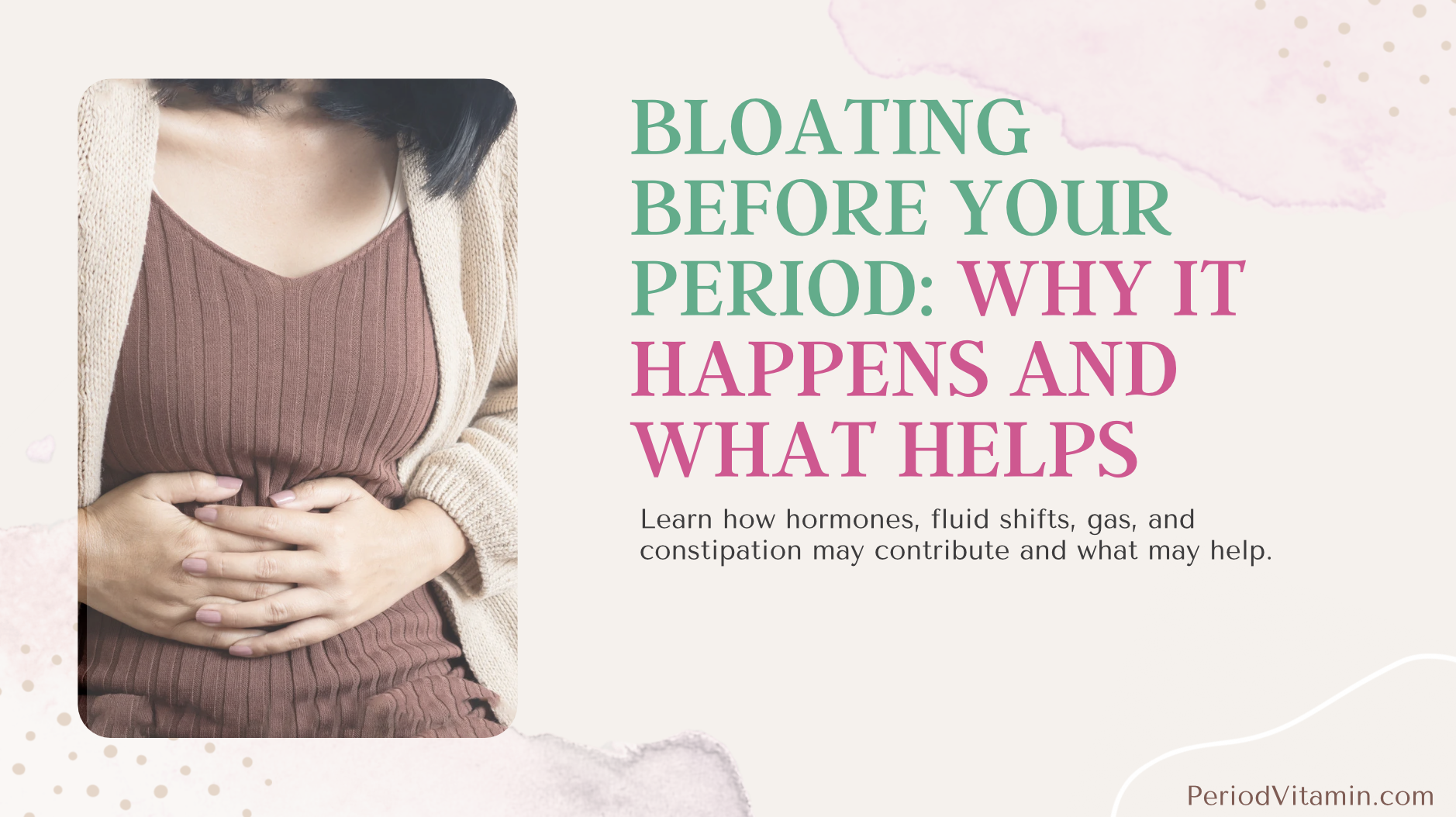
Does your stomach suddenly feel full, tight, or swollen in the days before your period?
Your clothes may feel tighter around your waist. Your stomach might look larger than usual, and the number on the scale may increase slightly even though you have not changed your normal routine.
This experience is often called period bloating or PMS bloating. It is one of the most common physical symptoms women notice before menstruation.
Bloating before your period may be connected to temporary fluid shifts, gas, constipation, changes in digestion, or several of these factors happening together. Although period bloating can be uncomfortable, it is usually temporary and often improves within the first few days of menstruation.
Understanding why it happens can help you find realistic ways to support your body without extreme diets, detox drinks, or unnecessary food restrictions.
Table of Contents
- What is period bloating?
- Why do you get bloated before your period?
- When does period bloating begin?
- How long does period bloating last?
- How can you reduce bloating before your period?
- What should you eat when you feel bloated?
- Can vitamins or supplements help?
- When should you talk with a doctor?
- Frequently asked questions
What Is Period Bloating?
Bloating is the feeling of pressure, fullness, tightness, or swelling in your abdomen. You may feel as though your stomach is larger even when there is very little visible change.
Bloating and abdominal distention are related, but they are not exactly the same.
The National Institute of Diabetes and Digestive and Kidney Diseases explains that bloating describes the feeling of fullness or swelling. Distention means that the abdomen has physically become larger than usual.
This means you can feel extremely bloated without having a dramatic change in your appearance. On other days, your stomach may look noticeably rounder, and your regular clothes may feel uncomfortable.
Period bloating can also happen alongside gas, constipation, breast tenderness, cramps, appetite changes, fatigue, and food cravings.
The Office on Women’s Health lists bloating, gassiness, constipation, and diarrhea among the possible physical symptoms of PMS.
Temporary bloating does not necessarily mean you have gained body fat. Changes in fluid levels, digestive contents, gas, and bowel movements can all affect your weight and waist measurement for a short period.
Why Do You Get Bloated Before Your Period?
There is no single cause of period bloating. Researchers believe changing hormone levels may play an important role, but hormones are not the only possible explanation.
Your digestion, food choices, bowel habits, sleep, stress, and existing health conditions may all influence how bloated you feel during a particular cycle.
Changing hormones may influence fluid balance
After ovulation, estrogen and progesterone levels change as your body prepares for a possible pregnancy.
If pregnancy does not occur, these hormone levels eventually decline before menstruation begins. Researchers believe that some women are more sensitive to these normal hormonal changes than others. The same hormonal fluctuations may also contribute to other physical symptoms, including breast tenderness before your period.
Hormones involved in the menstrual cycle may also influence how the body regulates fluids and electrolytes. This may contribute to temporary puffiness in the abdomen, breasts, face, hands, or legs.
One study followed 62 healthy women across 765 menstrual cycles. The women’s perception of fluid retention gradually increased after ovulation and was highest around the beginning of menstrual bleeding. You can read the research summary through PubMed.
This does not mean every woman will experience the same pattern. It does help explain why your body may temporarily look or feel different even when your normal eating and exercise habits have not changed.
Digestion may change around your period
Your menstrual cycle affects more than your reproductive system. Some women notice changes in their digestive system before or during menstruation.
You may become more constipated before your period. When stool moves slowly through the intestines, digestive contents and gas can remain in the gut longer. This may increase fullness, pressure, and visible abdominal distention.
Other women experience more frequent bowel movements or diarrhea when menstruation begins.
Research published in 2024 found that digestive symptoms such as bloating, constipation, and nausea were commonly reported around menstruation. You can view the study summary here.
The exact response can be different for every woman. You may even notice constipation during one cycle and looser bowel movements during another.
Digestive gas can contribute to bloating
Gas is a normal part of digestion. It enters the digestive tract when you swallow air and when bacteria in the large intestine break down carbohydrates that were not completely digested earlier.
Certain daily habits can increase the amount of air you swallow. Eating quickly, drinking carbonated beverages, chewing gum, drinking through a straw, or talking frequently while eating may contribute to gas.
Some foods can also produce more gas during digestion. Common examples include beans, onions, garlic, cabbage, cauliflower, certain dairy products, and foods containing sugar alcohols.
These foods are not automatically unhealthy, and not everyone needs to avoid them. Your individual tolerance is more important than following a universal list of forbidden foods.
A food that causes bloating for one person may not bother another person at all.
Constipation may make the pressure worse
Constipation and bloating often appear together. If you have fewer bowel movements before your period, your abdomen may feel unusually heavy or full.
Fiber, water, and regular physical activity can support normal bowel function. However, suddenly adding a large amount of fiber can increase gas and make bloating feel worse.
The NIDDK constipation guidance recommends eating fiber rich foods, drinking enough water, and getting regular physical activity. The general fiber recommendation for adults ranges from 22 to 34 grams per day, depending on age and sex.
If your current diet contains very little fiber, increase it slowly. This gives your digestive system time to adjust.
Salty foods may increase temporary puffiness
Food cravings and eating habits can change before a period. You may find yourself reaching for chips, instant noodles, restaurant meals, takeout food, sweets, or other highly processed options.
Many of these foods contain large amounts of sodium. Sodium is an essential nutrient, but consuming much more than usual may make fluid related puffiness more noticeable in some women.
This does not mean you need to remove all salt from your diet. Instead, pay attention to the overall pattern.
If your bloating feels worse after restaurant meals or highly processed foods, preparing more meals at home during your most symptomatic days may help.
The Office on Women’s Health recommends reducing excessive salt, sugar, and caffeine during the two weeks before menstruation as one possible strategy for managing PMS symptoms.
Large meals may increase abdominal fullness
Hormonal changes may influence appetite and food cravings. If you eat larger meals than usual, your stomach may naturally feel fuller.
Rich meals, salty foods, sweets, and carbonated drinks can sometimes appear together during the days before a period. The combination may make bloating more noticeable.
Try not to blame yourself or respond by skipping meals the next day. Restricting food can increase hunger and make cravings harder to manage.
Eating regular, balanced meals may help you feel more comfortable and maintain steadier energy.
Existing digestive conditions may become more noticeable
Bloating before a period is not always caused entirely by PMS.
Irritable bowel syndrome, constipation, lactose intolerance, celiac disease, difficulty digesting certain carbohydrates, and other digestive conditions can cause bloating throughout the month.
The Office on Women’s Health notes that IBS symptoms may become worse before menstruation. If you frequently experience abdominal pain, constipation, diarrhea, or severe gas outside the premenstrual phase, consider discussing the pattern with a healthcare professional.
When Does Period Bloating Begin?
Some women notice bloating only one or two days before their period. Others begin to feel it during the week before menstruation.
PMS symptoms can appear after ovulation, which is usually during the second half of the menstrual cycle. Bloating may gradually become more noticeable as your period approaches.
A common pattern looks like this:
| Time in the cycle | What you may notice |
|---|---|
| After ovulation | Mild fullness or digestive changes may begin |
| Week before the period | Bloating may gradually become more noticeable |
| Final two days | Abdominal tightness or puffiness may feel strongest |
| Beginning of menstruation | Bloating may continue with cramps or bowel changes |
| First few days of bleeding | Symptoms often begin to improve |
Your cycle does not need to follow this exact pattern. The most useful clue is whether your bloating appears and improves around the same time for several consecutive months.
How Long Does Period Bloating Last?
Period bloating usually improves after menstruation begins. Some women feel better on the first day of bleeding, while others continue to feel bloated for several days.
According to the Office on Women’s Health, PMS symptoms commonly improve within a few days after the period starts as hormone levels begin rising again.
Bloating that continues throughout the entire month may have another cause. It can still become worse before menstruation, but the menstrual cycle may not be the only factor involved.
Tracking your symptoms can help you recognize the difference between temporary period bloating and persistent digestive discomfort.
How Can You Reduce Bloating Before Your Period?
There is no single remedy that works for every woman because not all period bloating has the same cause.
If your bloating is mainly related to constipation, regular bowel habits may provide the most relief. If gas is the main issue, eating slowly and limiting carbonated beverages may be more helpful. If you feel puffy after salty meals, reducing excessive sodium may make a difference.
Start with gentle changes and observe how your body responds.
Drink water consistently
It may seem strange to drink water when you already feel puffy, but severely restricting fluids is unlikely to help.
Adequate hydration supports digestion and helps fiber keep stool softer and easier to pass. Sip water regularly throughout the day instead of drinking a very large amount at once.
You do not need to force yourself to drink an extreme amount. Your needs depend on your size, activity level, diet, climate, medications, and health conditions.
Choose balanced meals
Balanced meals can help support energy, digestion, and nutrient intake throughout your cycle.
A simple meal might include protein, a comfortable portion of carbohydrates, vegetables, and a source of healthy fat. For example, you might choose salmon or tofu with rice and cooked vegetables.
If large meals make you feel uncomfortable, try slightly smaller portions and eat slowly. This does not mean eating too little. The goal is to reduce uncomfortable pressure while still giving your body enough nourishment.
Reduce unusually salty foods
You do not need a completely salt free diet. Instead, reduce foods that contain much more sodium than you would normally consume.
Common sources include packaged snacks, processed meat, instant noodles, canned soup, frozen meals, restaurant sauces, fast food, and salty condiments.
Home prepared meals can make it easier to control sodium while still enjoying flavorful food.
Increase fiber gradually
Fiber may help if constipation contributes to your bloating. Good sources include oats, berries, beans, lentils, vegetables, whole grains, kiwi, chia seeds, and ground flaxseed.
Begin with a comfortable amount and increase it slowly. Eating a large serving of beans, bran, or raw vegetables when your body is not accustomed to them may produce additional gas.
Remember to drink enough water as you increase your fiber intake.
Keep your body moving
Regular movement can support normal digestion and overall menstrual wellness.
You do not need an intense workout to make bloating disappear. Walking, gentle cycling, yoga, stretching, or your normal workout can all be helpful forms of activity.
A short walk after eating may feel especially comfortable if you have been sitting for a long time.
Reduce habits that increase swallowed air
If gas is a major part of your bloating, try eating more slowly and chewing food thoroughly. You can also experiment with limiting carbonated beverages, straws, gum, and hard candy during your most symptomatic days.
These small changes may be more realistic and useful than removing entire food groups.
Pay attention to personal food triggers
Not every woman needs to avoid dairy, gluten, beans, or vegetables. Restricting foods without a clear reason can make it harder to get enough nutrients.
Instead, look for repeated patterns.
If milk consistently causes bloating and diarrhea, for example, discuss possible lactose intolerance with a healthcare professional. If many different foods appear to cause symptoms, a registered dietitian can help you investigate without making your diet unnecessarily restrictive.
Prioritize sleep and stress management
Stress does not mean your symptoms are imaginary. The brain and digestive system communicate closely, and stress can influence digestive sensitivity, eating behavior, and bowel habits.
Try to maintain a consistent sleep schedule. Meditation, gentle stretching, breathing exercises, journaling, or a short evening walk may also help you relax.
These habits may not remove bloating immediately, but they can support your overall PMS routine.
What Should You Eat When You Feel Bloated?
There is no special detox diet for period bloating. Your body does not need a juice cleanse, restrictive meal plan, or detox tea.
Focus on balanced foods that feel comfortable for your digestive system.
Protein options include eggs, chicken, fish, tofu, Greek yogurt, and beans. You can add carbohydrates such as oats, rice, potatoes, fruit, or whole grains. Cooked vegetables may feel more comfortable than a very large raw salad when you are already bloated.
Foods such as potatoes, bananas, yogurt, beans, and leafy greens contain potassium and can be part of a balanced diet. However, potassium rich foods should not be described as a guaranteed way to flush water from the body.
People with kidney disease or certain health conditions may need individualized advice about potassium.
If you know that certain foods produce gas for you, reduce the portion during your most sensitive days rather than assuming you must permanently eliminate the food.
Can Vitamins or Supplements Help With Period Bloating?
Food and healthy daily habits should remain the foundation of menstrual wellness. Supplements may help fill nutritional gaps, but they should not be presented as a cure for PMS or bloating.
Vitamin B6
Some research suggests that vitamin B6 may help with certain PMS symptoms, including bloating. However, scientists are not yet certain about the strength of this benefit.
The NIH Office of Dietary Supplements warns that taking large amounts of vitamin B6 for a long period can cause serious nerve damage.
Check the total vitamin B6 amount in every supplement you use. Avoid combining several products containing high amounts unless a healthcare professional has reviewed them.
Magnesium
Magnesium supports normal muscle, nerve, and energy functions. It is naturally available in leafy greens, beans, nuts, seeds, and whole grains.
Research on magnesium supplements for PMS has produced mixed results. Supplemental magnesium can also cause diarrhea and may interact with certain medications.
People with kidney problems should speak with a healthcare professional before using magnesium supplements.
Water pills and detox products
Do not use prescription water pills, strong herbal diuretics, or products promising rapid water loss without medical guidance.
These products may affect your fluid balance, electrolytes, blood pressure, and kidney function. Temporary weight loss from water is not the same as losing body fat or solving the cause of bloating.
Track Your Symptoms for Several Cycles
A simple symptom record can help you understand whether your bloating follows your menstrual cycle.
For two or three months, record your cycle day, bloating severity, bowel movements, abdominal pain, sleep, exercise, and any unusual meals. You can also note whether the bloating is mainly a sensation or whether your abdomen becomes visibly larger.
You do not need a complicated tracking system. A few notes on your calendar or phone are enough.
This information can help you recognize patterns. It can also be useful if you decide to discuss your symptoms with a healthcare professional.
When Should You Talk With a Doctor?
Mild bloating that appears before your period and improves after menstruation is often consistent with PMS.
However, not every case of bloating should be blamed on hormones.
Contact a healthcare professional if your bloating occurs most days of the month, suddenly becomes worse, interferes with your daily activities, or does not improve after your period.
You should also seek medical advice if bloating happens with persistent abdominal pain, ongoing constipation or diarrhea, unexplained weight loss, frequent vomiting, fever, blood in your stool, loss of appetite, or feeling full after eating very little.
If your period is late and pregnancy is possible, consider taking a pregnancy test according to the directions.
Seek urgent medical attention if you experience sudden severe abdominal pain, repeated vomiting, fainting, trouble breathing, or black or bloody stool.
A healthcare professional can help determine whether your symptoms are related to PMS, constipation, IBS, food intolerance, medication, pregnancy, or another health condition.
Frequently Asked Questions
Mild bloating is a common PMS symptom. It often appears during the days before menstruation and improves within the first few days after bleeding begins. Severe, persistent, or worsening bloating should be evaluated by a healthcare professional.
Some women notice bloating one or two days before their period. Others notice it during the preceding week. Tracking your symptoms for several cycles can help you identify your normal pattern.
Period bloating may involve temporary fluid shifts, digestive gas, constipation, or a combination of these factors. The cause may also feel different from one cycle to another.
Consistent hydration supports digestion and may help prevent constipation, especially when you eat more fiber. Water is not an instant cure, and drinking an excessive amount is unnecessary.
Temporary abdominal distention may come from gas, constipation, digestive contents, and fluid related changes. If your abdomen remains enlarged after your period or bloating occurs throughout the month, speak with a healthcare professional.
The number on the scale may temporarily increase because of fluid changes, digestive contents, and bowel habits. This is not necessarily body fat, and the change often improves after menstruation begins.
Bloating can happen with both PMS and early pregnancy. Bloating alone cannot tell you whether you are pregnant. If your period is late and pregnancy is possible, take a pregnancy test according to the instructions.
A Gentle Reminder
Your body is not failing you because it looks or feels different before your period.
Bloating may be your body’s temporary response to hormonal changes, fluid shifts, digestion, constipation, food choices, stress, or several factors happening together.
Instead of fighting your body, begin by observing it. Drink water consistently, choose balanced meals, increase fiber gradually, move in a way that feels good, and give yourself enough rest.
If bloating becomes severe, persistent, or different from your normal pattern, speak with a healthcare professional. You deserve to understand what your body is telling you.
Supporting your body throughout the menstrual cycle begins with balanced nutrition, regular movement, adequate sleep, and appropriate healthcare.
Some women also choose a comprehensive menstrual wellness supplement as part of their daily nutrition routine. You can learn more about the vitamins, minerals, and herbs included in Period Vitamin and decide whether it fits your personal wellness plan.
Period Vitamin is a dietary supplement. It is not intended to diagnose, treat, cure, or prevent PMS, bloating, or any disease. Individual experiences may vary. Speak with a healthcare professional before using supplements if you are pregnant, nursing, taking medication, or managing a health condition.